Human teachers teaching human children how to be
good humans
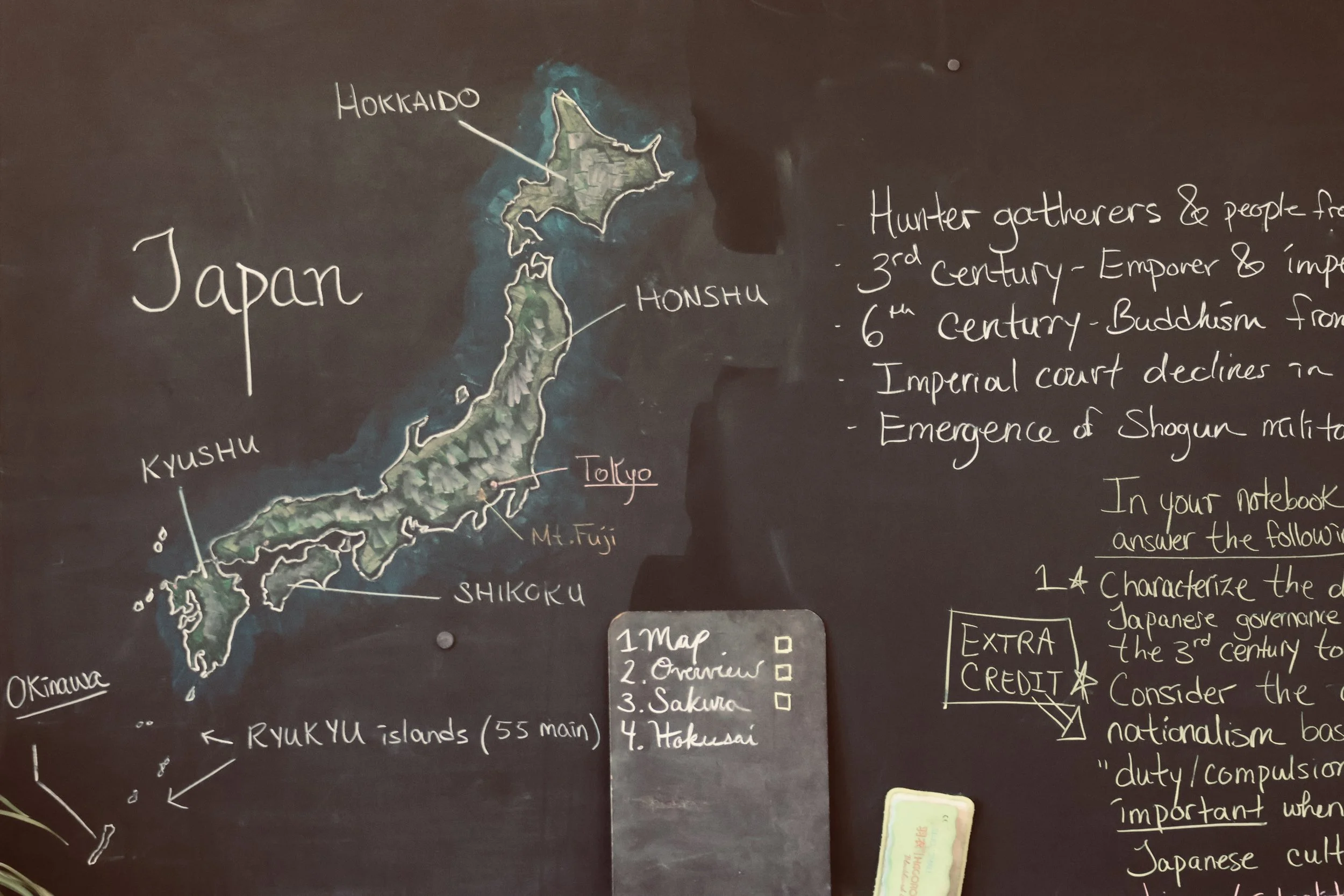
Above: our 7th grade teacher’s drawing of Japan for a history, culture, and geography block.
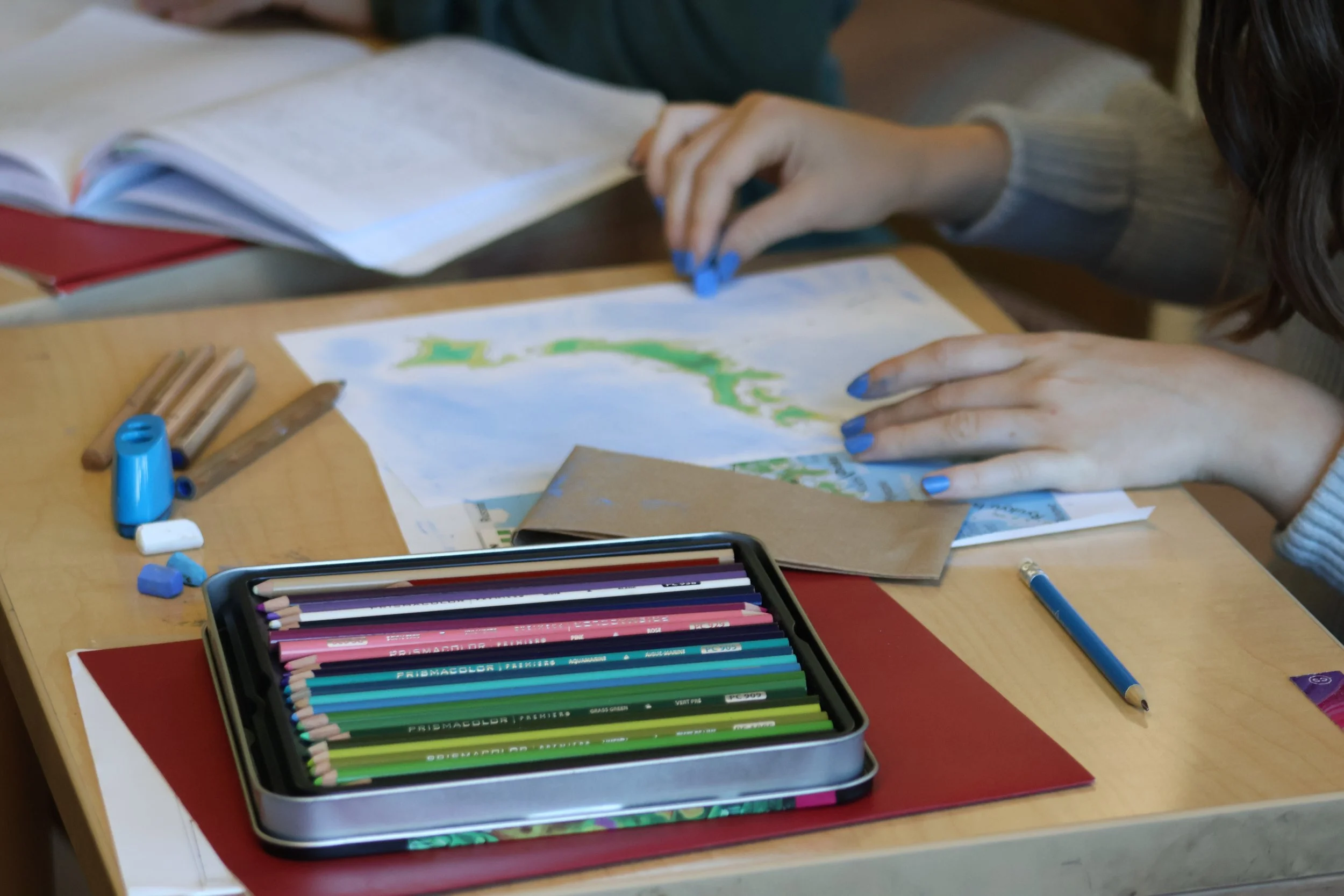
Below: a student rendering it in her own book, using similar artistic techniques to make her learning beautiful, meaningful, and worth cherishing.
A Time Magazine report cites over 200 peer-reviewed studies: after more than a decade of increasing screen-based technology in education, classroom tech has caused a decline in academic performance and mental health. In contrast, our Ithaca Waldorf School campus is filled with students who are healthy, happy, and engaged.
Waldorf Education offers a “slow tech” curriculum: a conscious introduction to tech in the upper grades that prioritizes human connection. Our approach emphasizes strong student-teacher relationships, and a broad and holistic curriculum that engages the whole child by integrating the arts, movement and outdoor learning into academics.
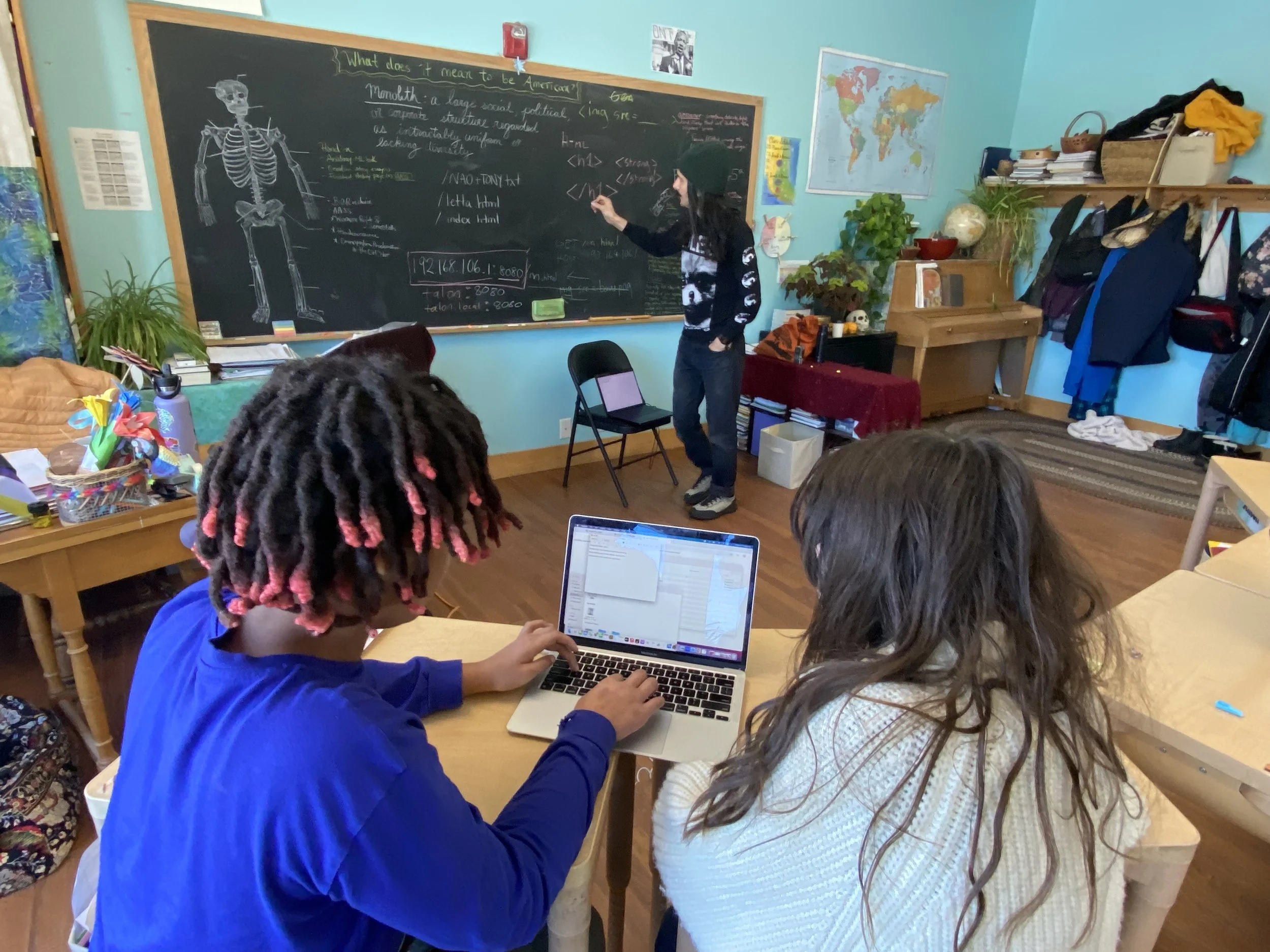
Waldorf is not anti-tech—we’re slow tech. We introduce technology in the right way at the right time. Here, an 8th grade classroom learns how to create their own internet network among school laptops. Learning how computers and the internet work is an important step in demystifying and humanizing technology that for many of us feels completely unapproachable.
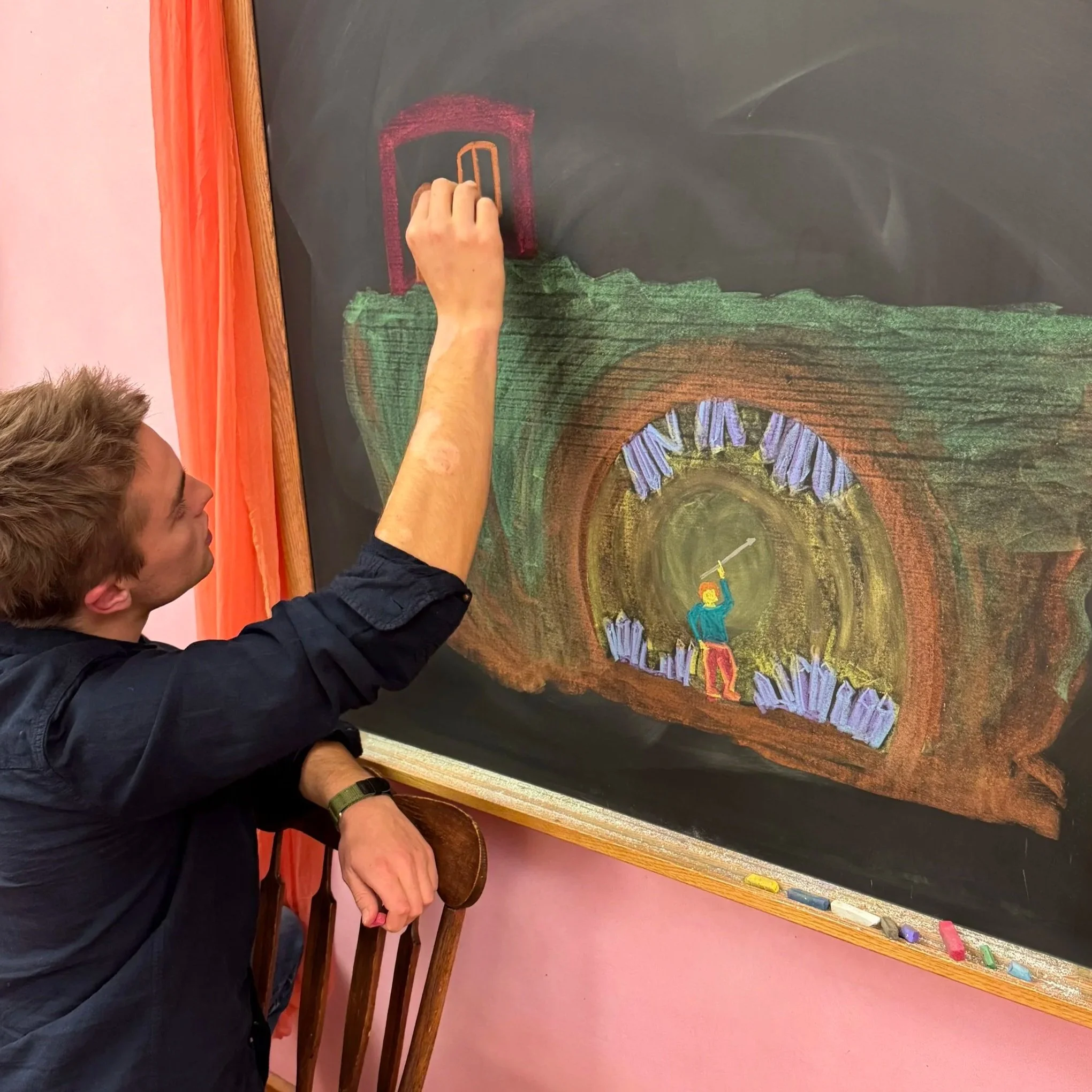
Lessons from a human teacher… through chalk on a board.
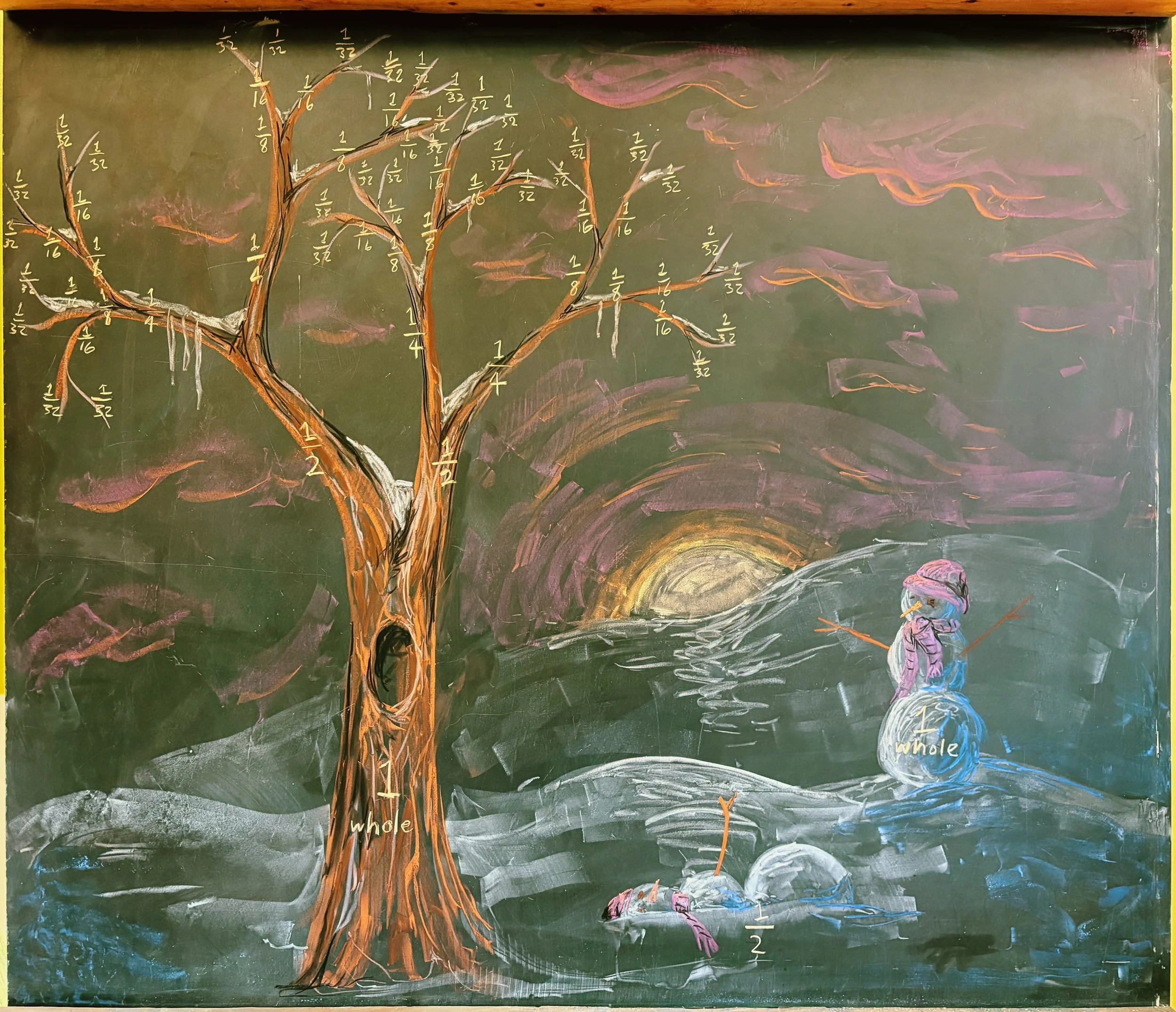
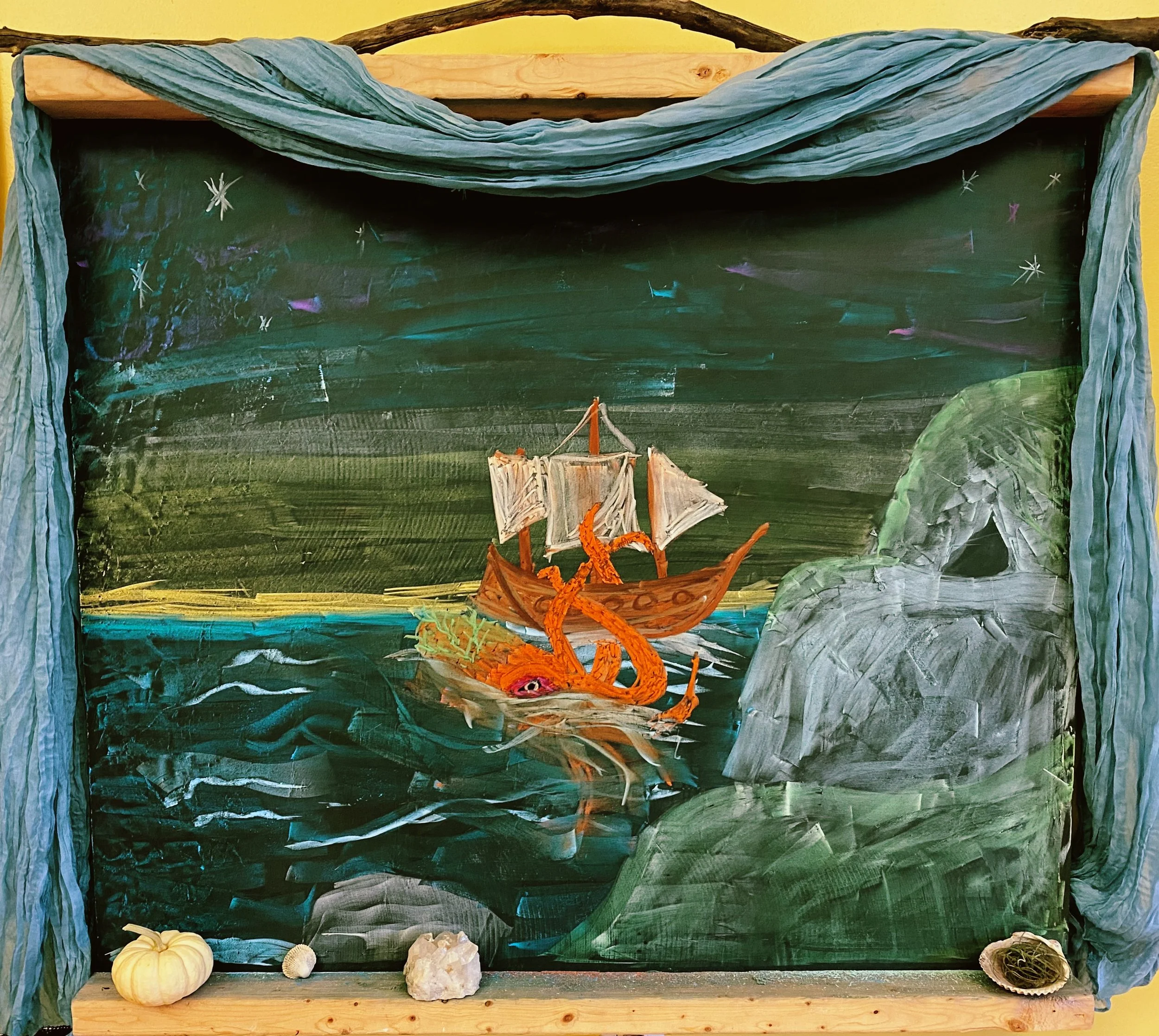
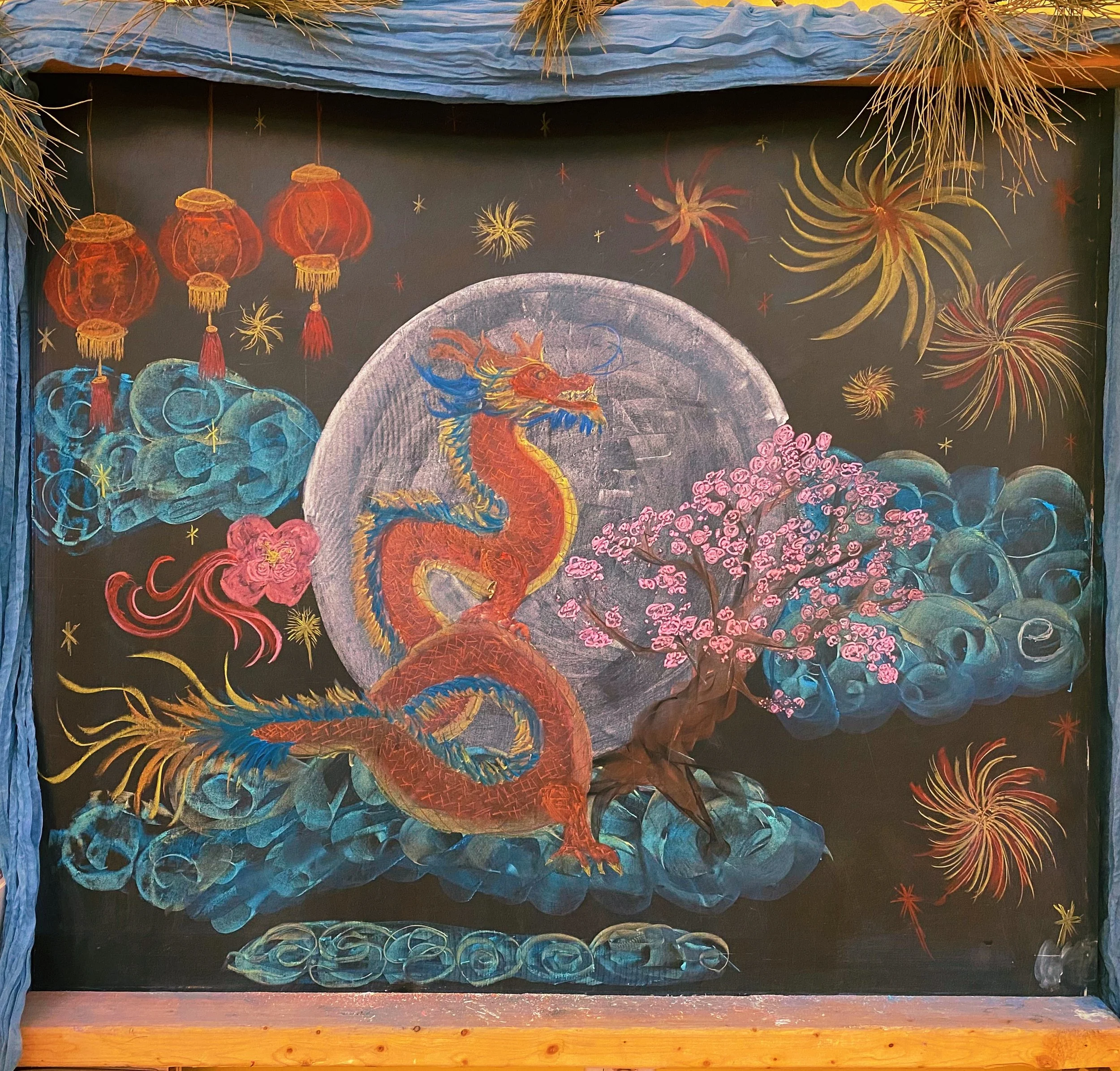
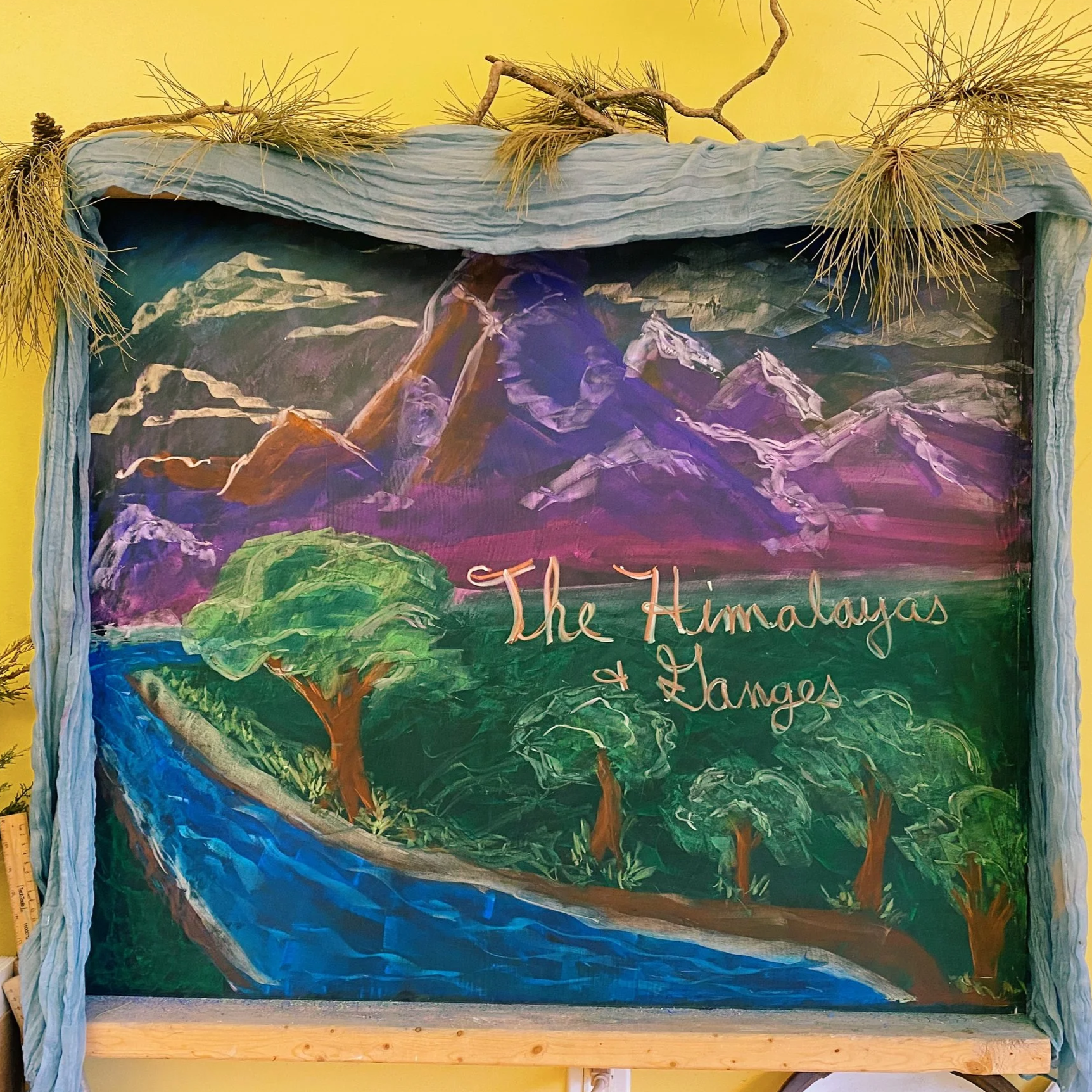
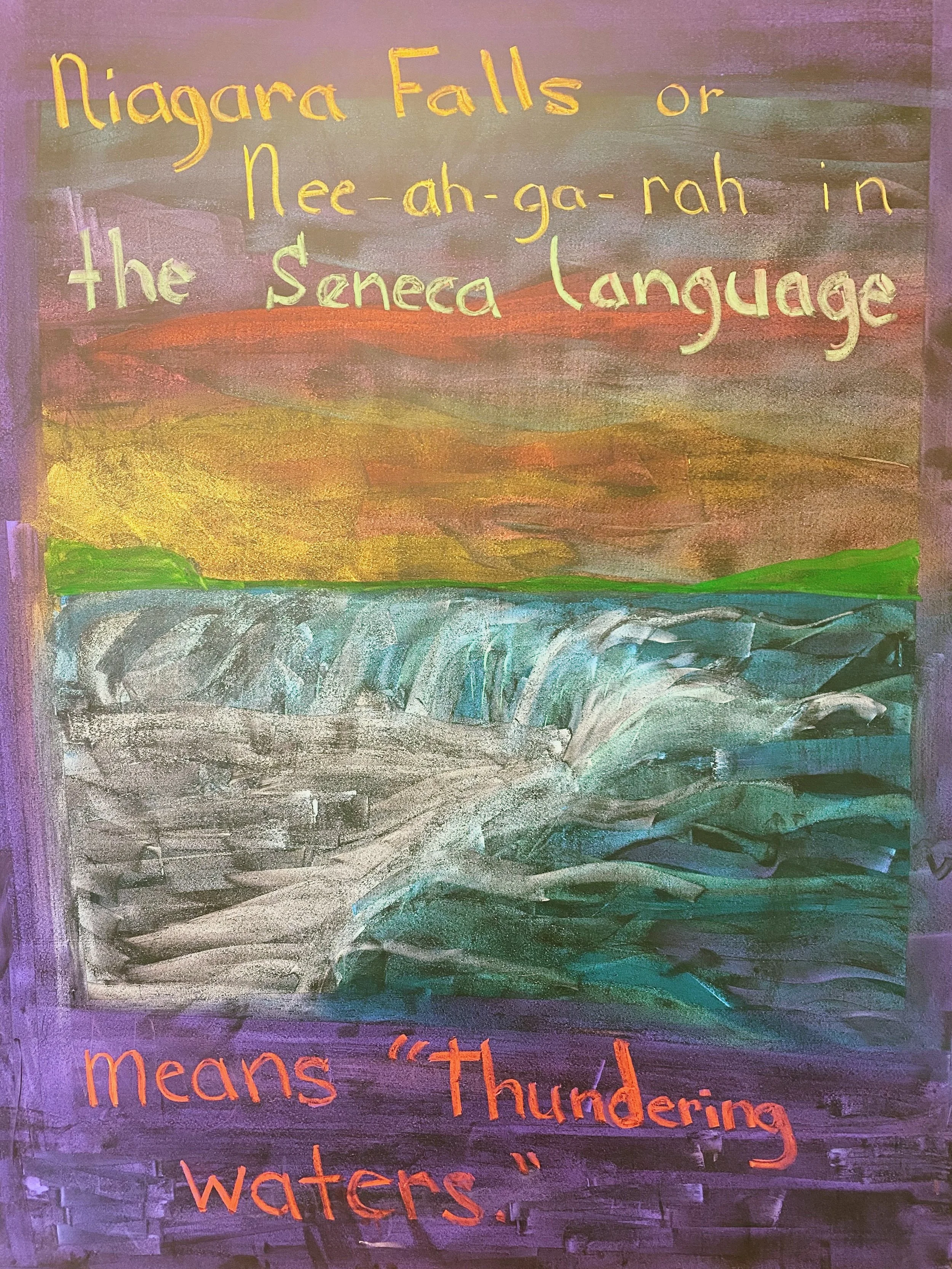
You won’t see smart boards in our classrooms, or even white boards. Waldorf teachers are known for (and specifically trained to create) their gorgeous chalkboard artwork. Every 3-4 weeks, as a new unit theme arrives in the classroom, students know to look to the chalkboard to see what their teacher has created this time. Some chalk drawings remain on the board for an entire unit, often gaining elements or details as the material progresses or the season changes.
These painstakingly crafted chalkboard drawings are also ephemeral—the only “capture” of this art is how the students take it in and recreate it in their own Main Lesson Books, where they document their learning.
For students in lower elementary, copying from the board is how they learn to read and write (we “write to read” at IWS, meaning we form letters with our bodies and hands and pencils as the way in to learning how to read them). It’s also how our youngest students learn to organize their thoughts on a page, how to leave enough space for margins, how to fit all the words and pictures in a pleasing and clear display. These skills hone proprioception, impulse control, fine motor skills, attention and focus.
Our 4th-8th graders are in command of these skills. The external discipline of a teacher showing how to write and illustrate turns inward: upper elementary and middle school students compose their own summaries, essays, and creative writing, and chose artistic illuminations that aid them with remembering material and demonstrate pride in their work.
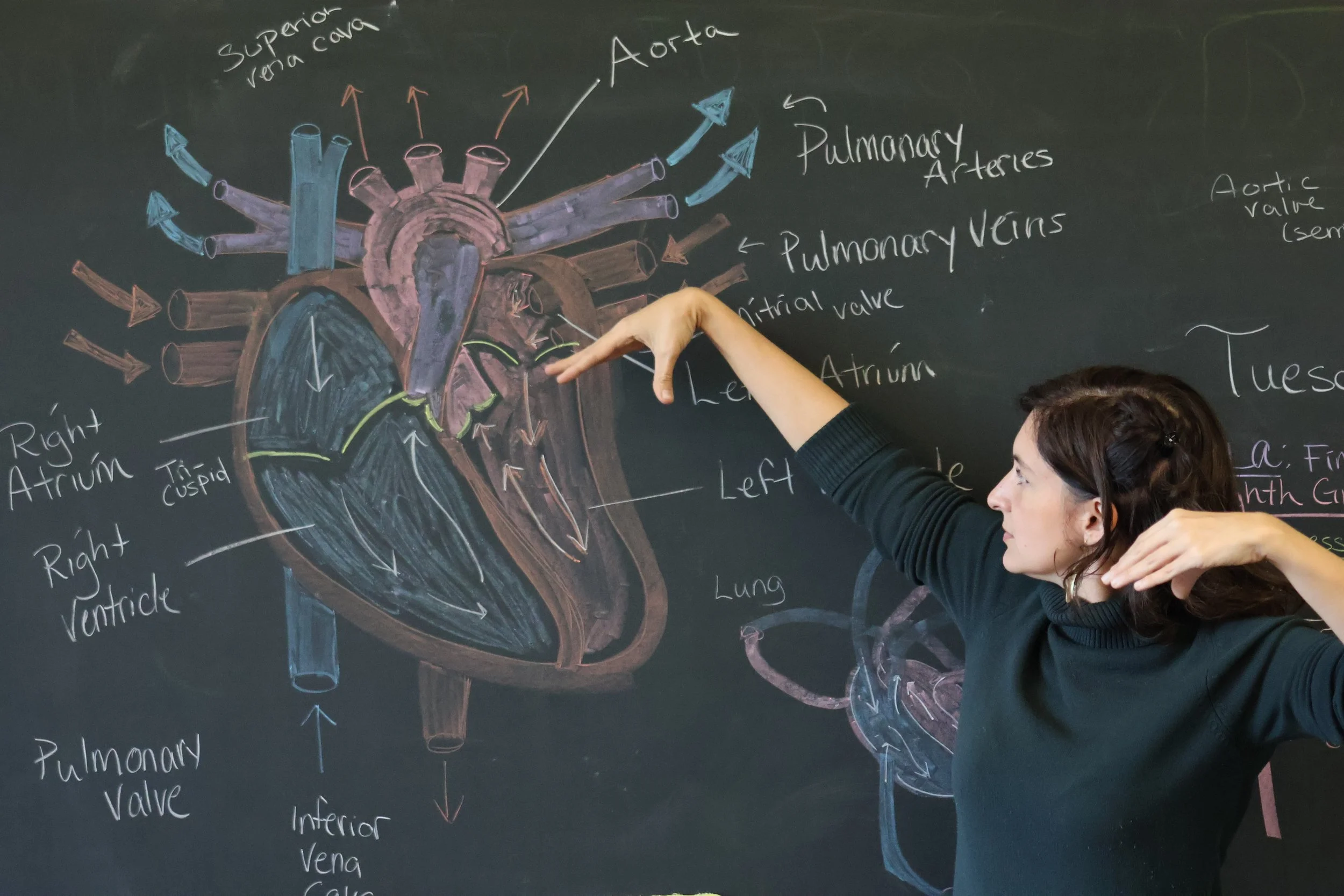
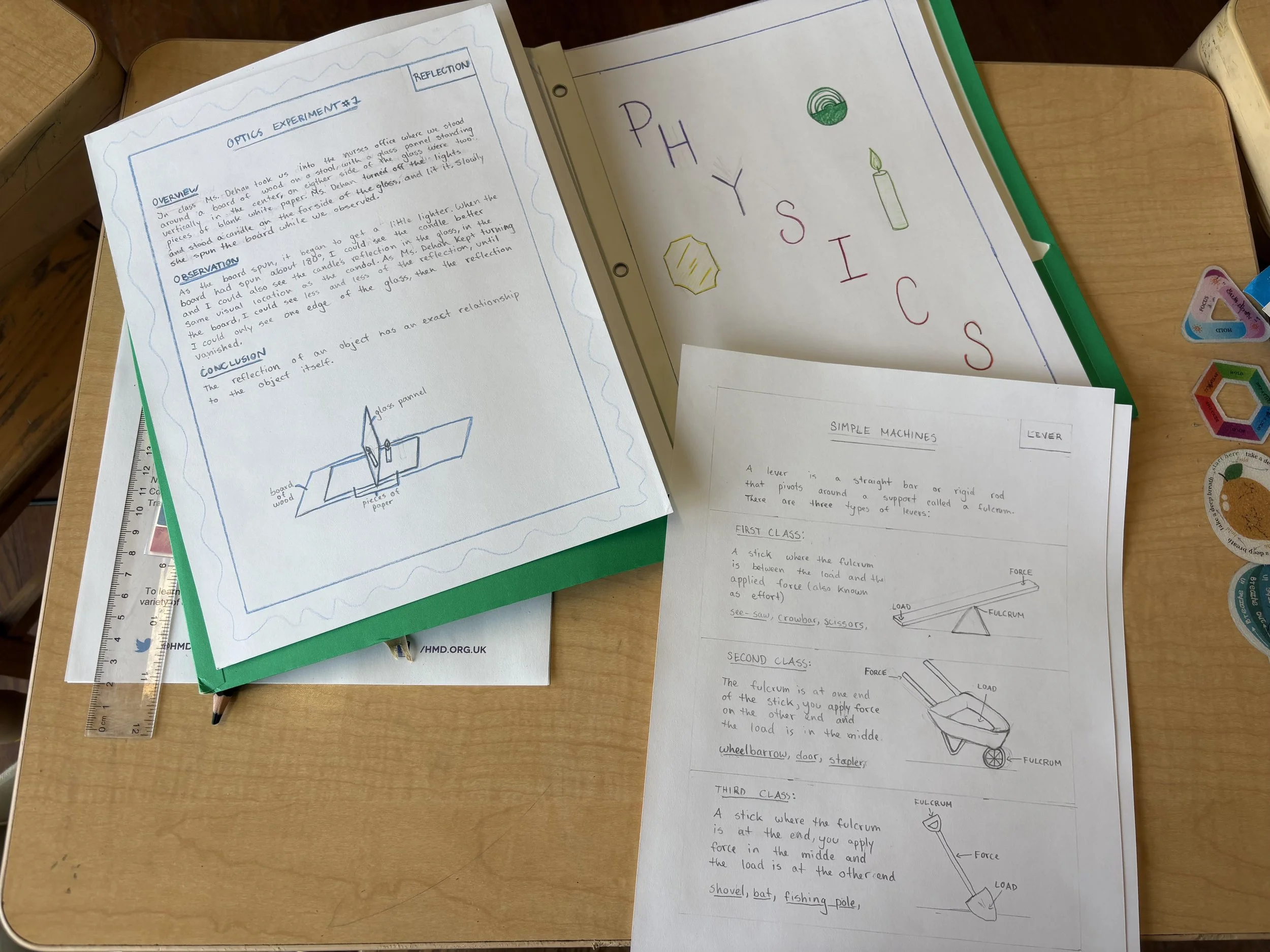
Middle schoolers learn to type, use word processing software, and conduct ethical and factual research online… but they still process their learning by handwriting and illustrating summaries of their lessons in their Main Lesson Books.
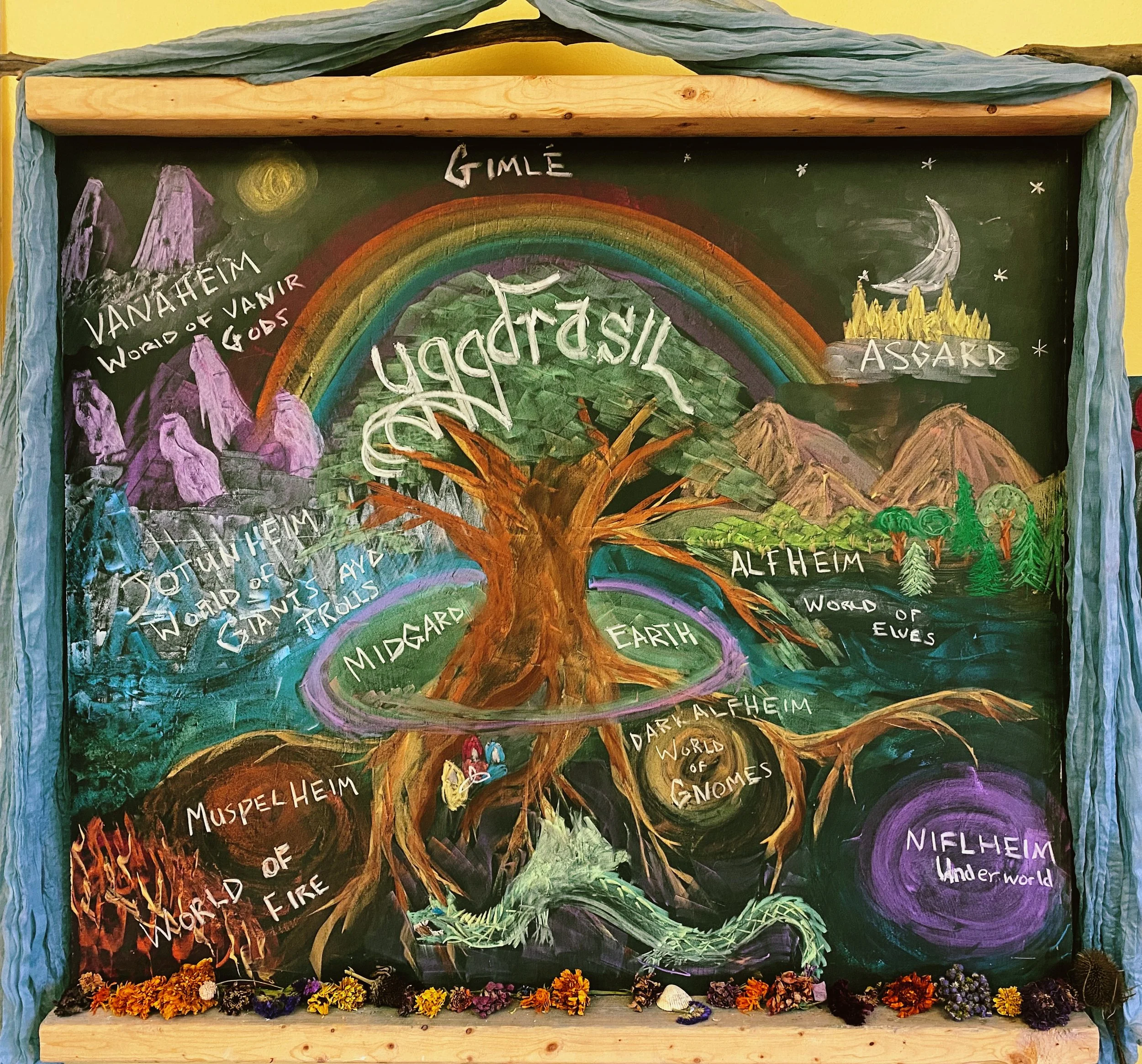
4th Grade curriculum through chalkboard art:
Norse History & Mythology
Fractions
Mythical Creatures
Lunar New Year
Asia Geography
and more…
Movement and Project-Based Learning
Human teachers bringing new material through beautiful chalkboards is about 10% of the true creative work in our school. Our teachers craft dynamic and engaging lessons in which children love to participate.
Our preschool and kindergarten teachers tell fairy and folk tales from around the world that offer rich vocabulary and inspiring images. They create small puppets by hand to convey these stories, from the teacher’s memory rather than from a book. Modeling storytelling by heart teaches a child that she is also capable of carrying wisdom and beauty inside her, and sharing it with others.
In the elementary grades, academic content still comes mostly from the teacher’s own portrayal, rather than a teacher reading from a page or projection. The puppets are gone, but these children process their learning with art, cooking, building, movement games, and re-enactments. Even math is brought through story: in 1st grade, all four processes are personified as gnomes, so that children connect more vividly with the concepts of addition, subtraction, multiplication and division in an age-appropriate way. Addition gnome is always collecting things to add to her treasure trove; Subtraction gnome has a hole in his pocket, and loses things here and there; Multiplication gnome loves to grow more out of what she already has; Division gnome is very particular about making sure everything gets shared fairly; and Queen Equals rules over them all, making sure order is kept on all sides.
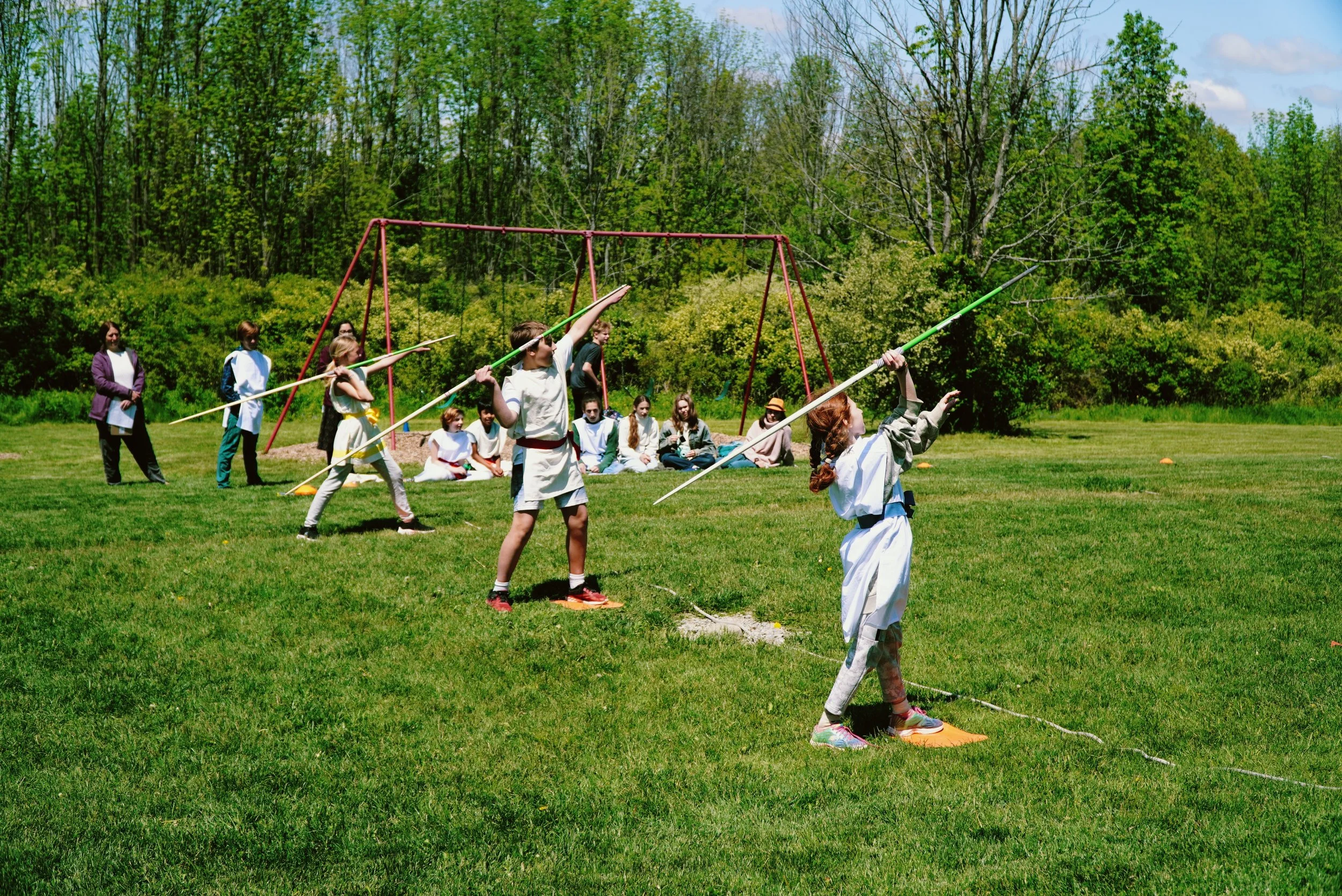
Upper elementary students find their classroom suddenly transformed into a city along the Nile river at the beginning of their ancient civilizations block. They take down their lesson that day as Egyptian scribes in the Temple of Horus, following the same rules, eating the same food, and playing the same games as the ancients did. 5th graders in Waldorf schools around the world study Greek history, geography, myth, democracy, and culture, culminating in a regional multi-school Olympiad sporting event. 7th graders play a life-size board game of the Silk Road trade route, following role-play-like rules like “your character can only go as far as Persia, and your character can only go two spaces outside of China, but you must somehow trade all your raisins for cashews… uh-oh, sand storm, move 5 spaces back!” 8th graders study revolutions from around the globe, and discuss at length which historical juncture feels closest to their own—our 8th grade teacher has gotten used to students identifying most with the Haitian Revolution, but lately students feel more connected to the French Revolution.
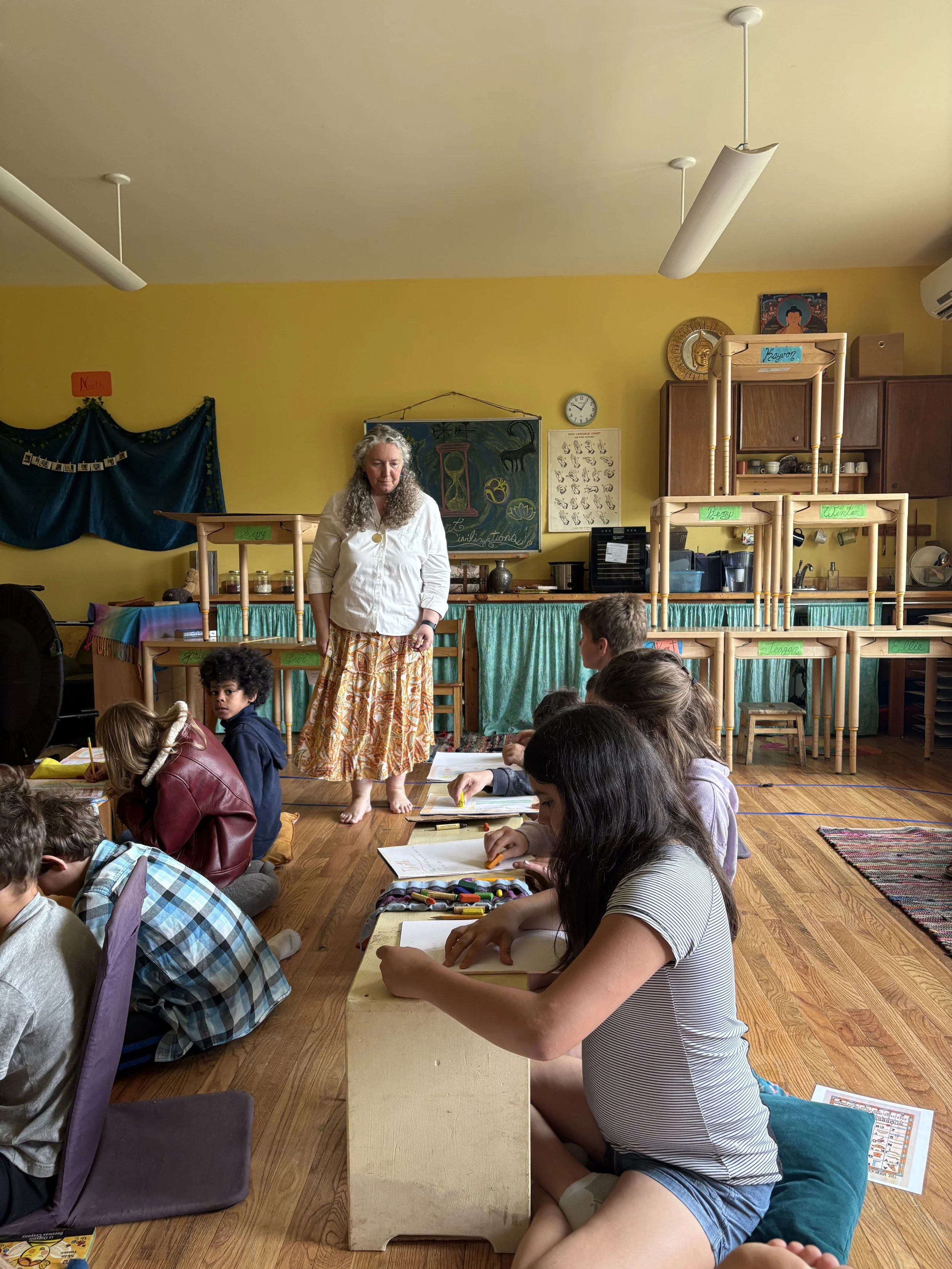
Ancient Egypt, featuring a pyramid of desks, altars to various deities, and barefooted scribes performing the sacred task of writing in complete silence.
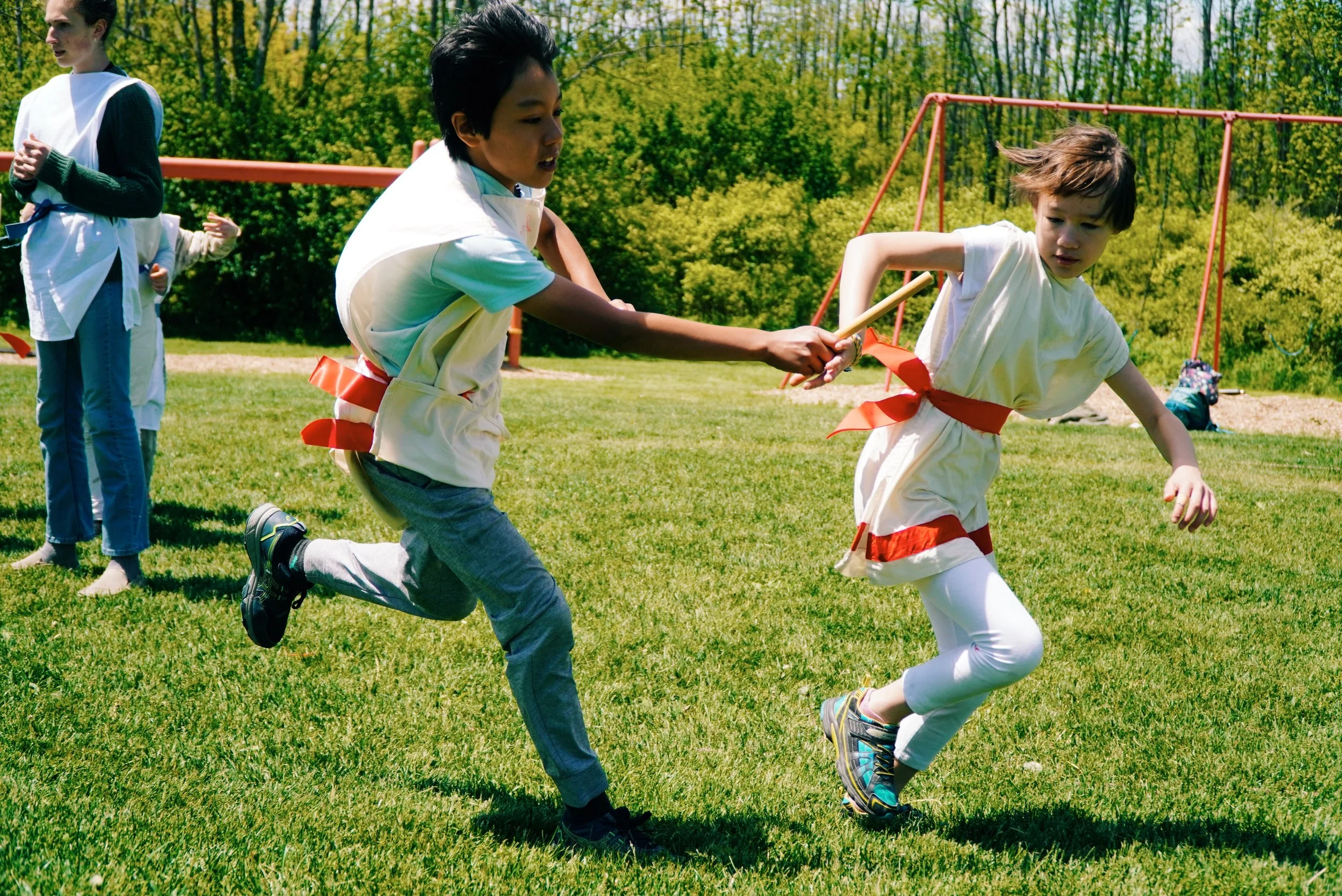
A classic Pentathlon might include javelin, discus, wrestling, relay race, and long jump.