
The Waldorf Advantage… what does that mean?
Have you met adults who went to Waldorf Schools as kids? They are among the most engaged, creative, competent people you’ll meet. They possess an eloquence, drive, and keen interest in the world around them that sets them apart.
In a world seemingly determined to divide, hypnotize, and commodify human beings, Waldorf Schools around the world continue our more than 100-year-old mission to nurture humans who can think clearly, seek true collaboration with others, and transform their good ideas into meaningful, ethical action in the world.
Science now proves what Waldorf teachers have known for over a century:
activities like cursive writing, knitting, and singing lead to superior cognitive skill development, even years later
gardening, sewing, and hands-on projects benefit our mental health and help intellectual learning “stick”
students who stay with one teacher for multiple years have better academic and social outcomes
sequencing “learning by ear” before “learning from a page” develops deeper comprehension and better retention in the upper grades, without any delay in mastery
Our integration of the arts into all subjects teaches students to:
ask deeper questions
find many solutions to a problem
make connections across disciplines
forge meaningful relationships with the people around them
Waldorf alumni become doctors, educators, lawyers, writers, entrepreneurs, farmers, engineers, artists, scientists and activists. More importantly, they become free-thinking humans who know themselves well, connect with the environment and people around them, and turn their powerful ideas into meaningful and unselfish action to benefit the world.
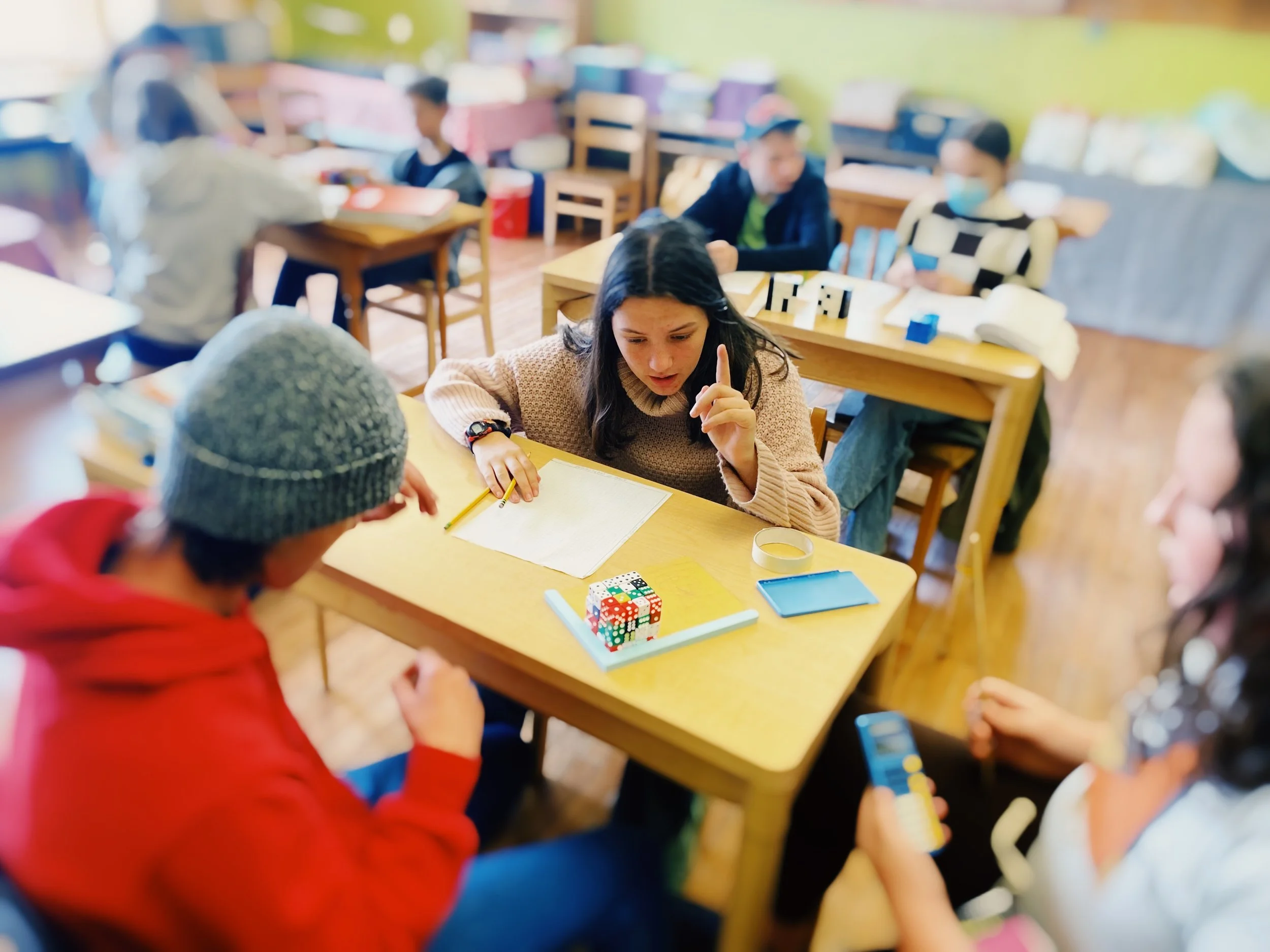
Middle school students collaborating on a math project
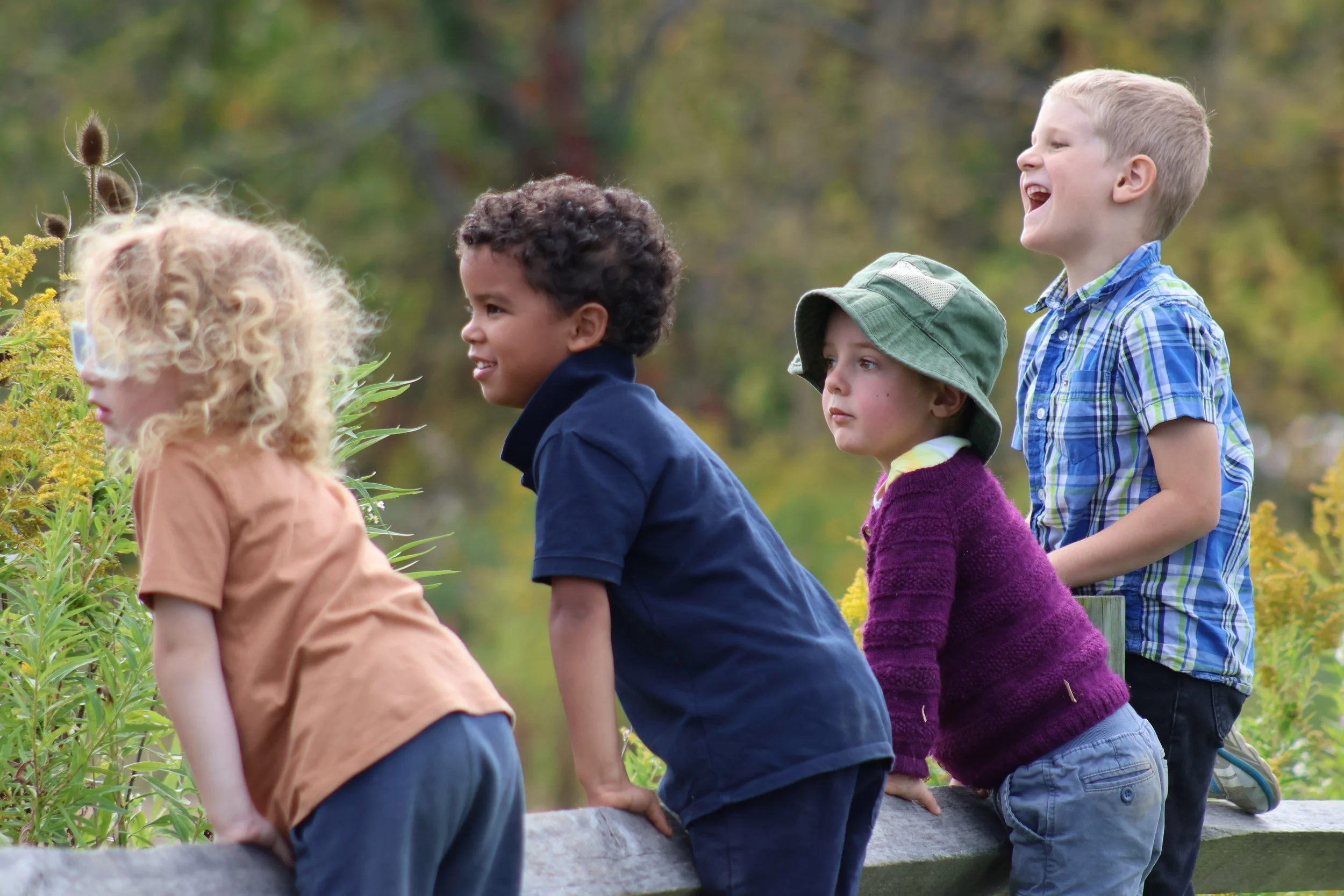
Kindergarteners watch the tractor make hay for our cows
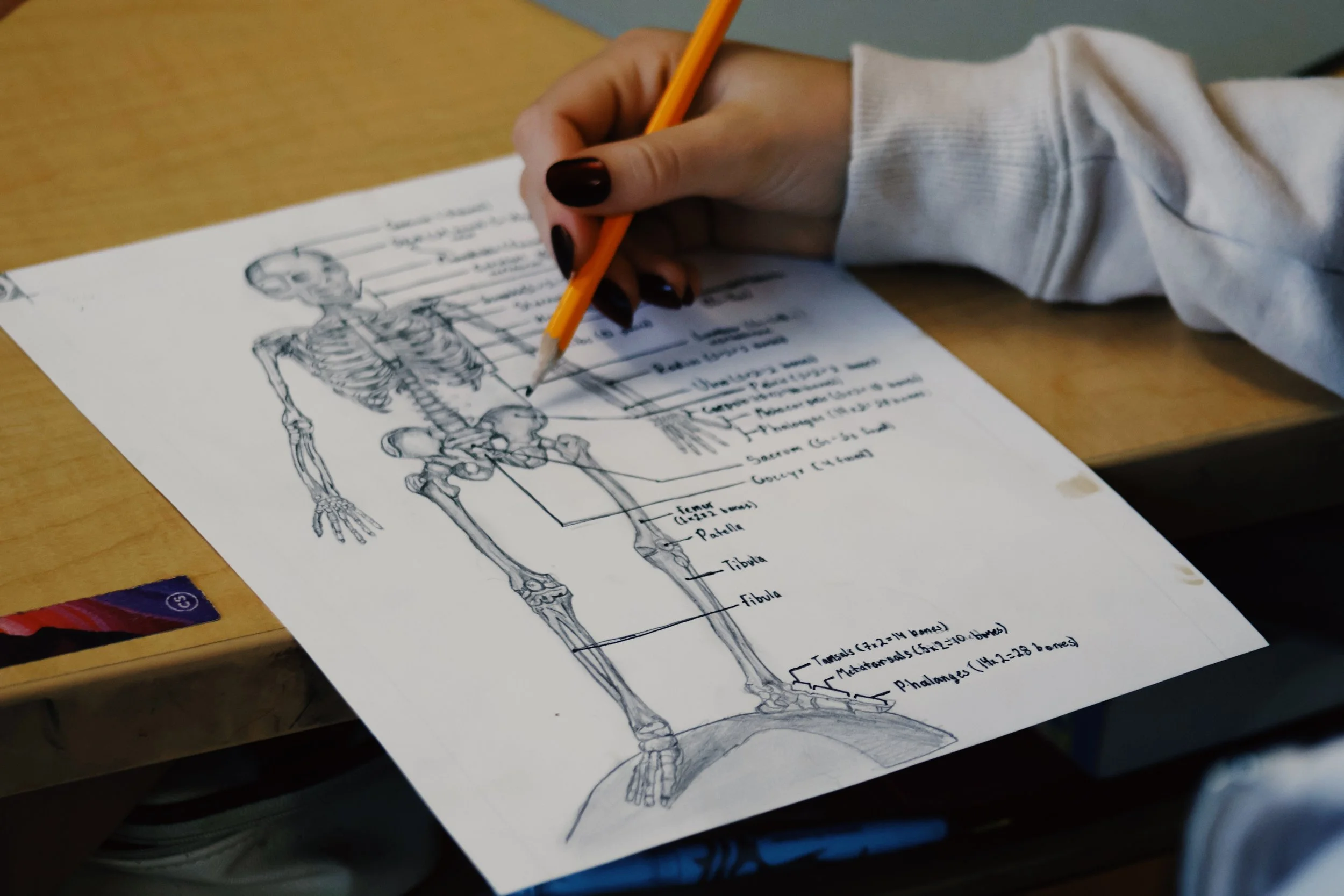
An 8th grader combines her fine art skills to memorize anatomy
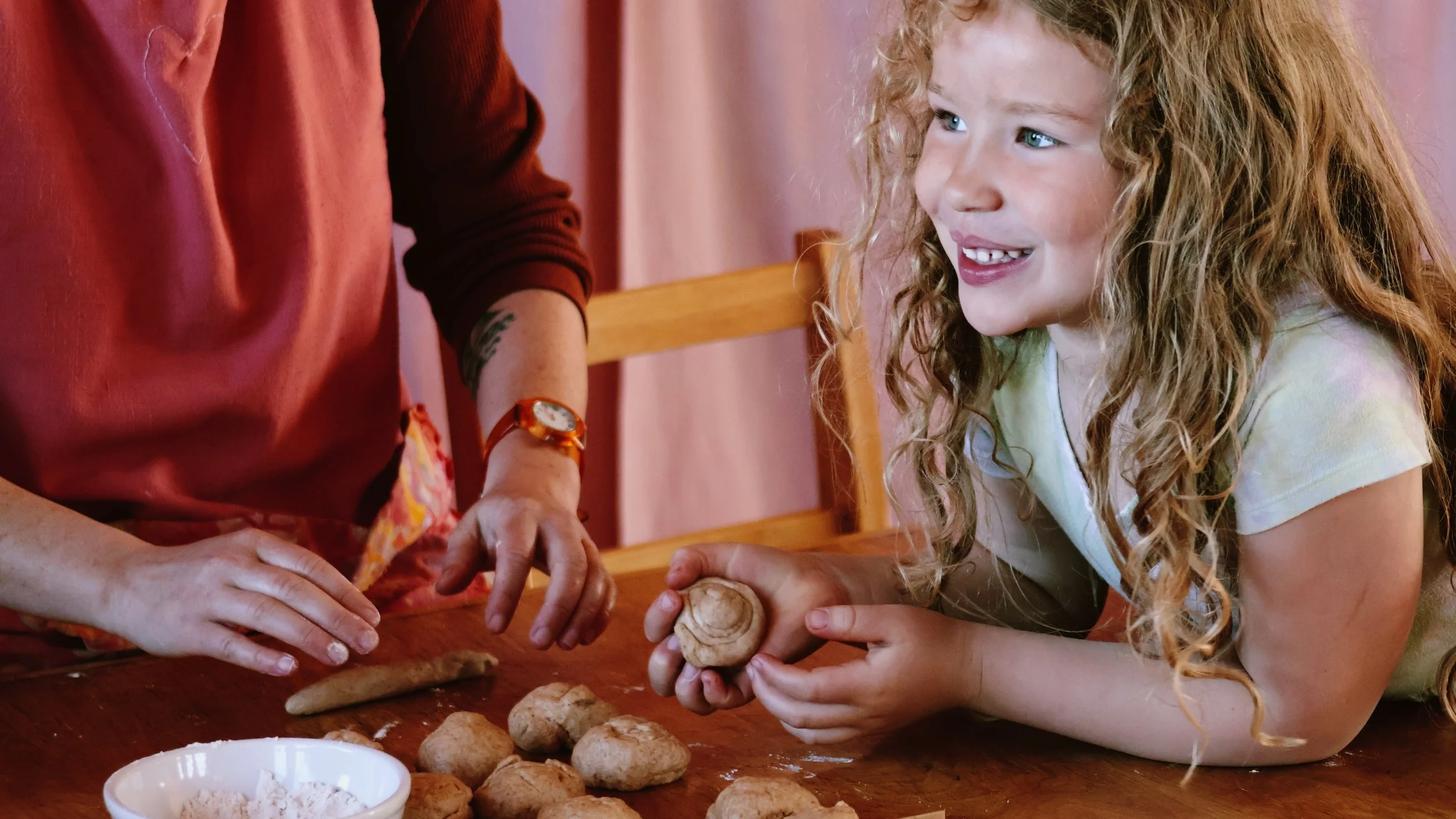
Preschoolers help make snack, like bread, crisp, and soup
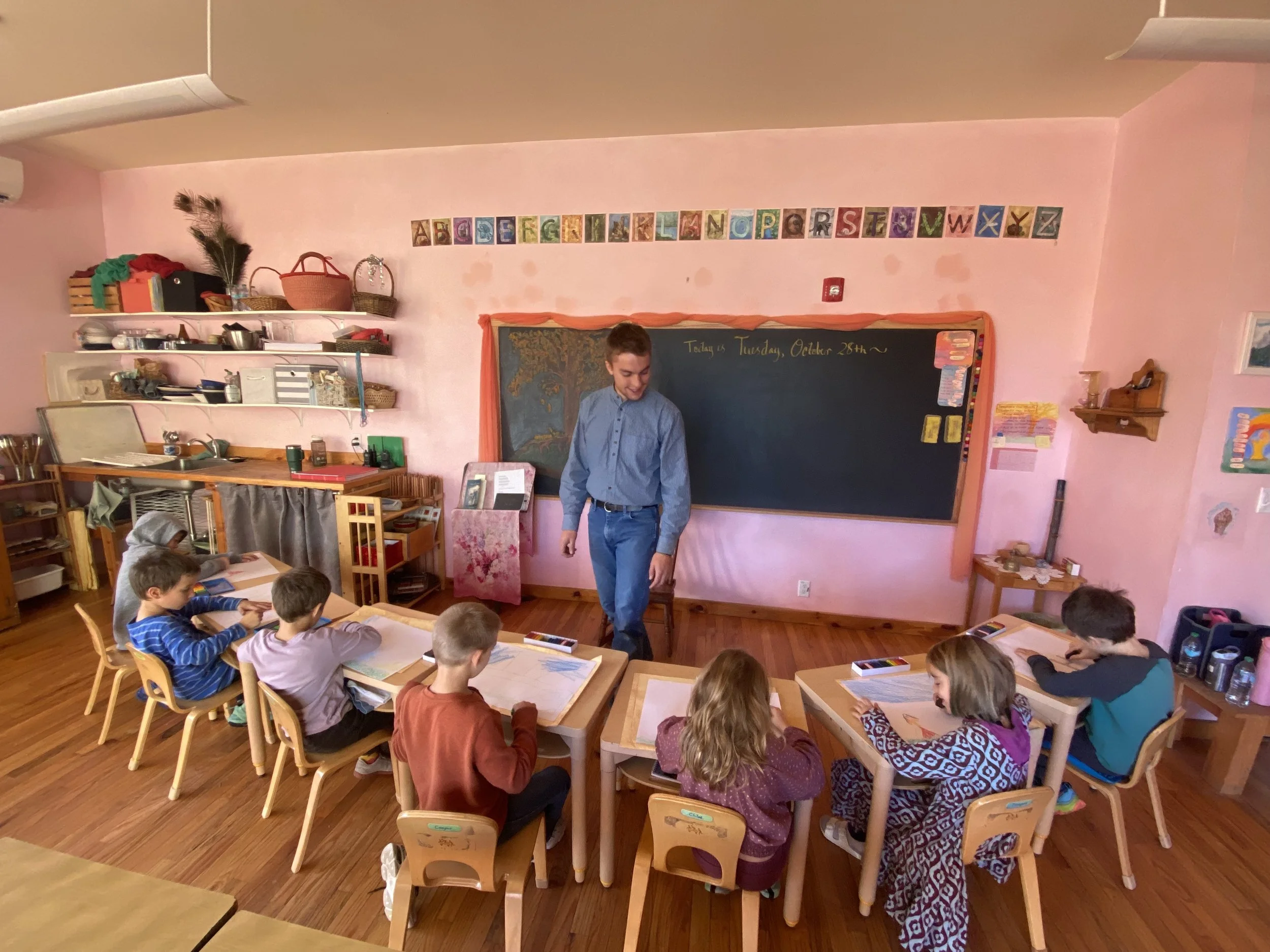
First graders document their learning through art

Students in grade 3-8 play violin, viola, cello, or guitar
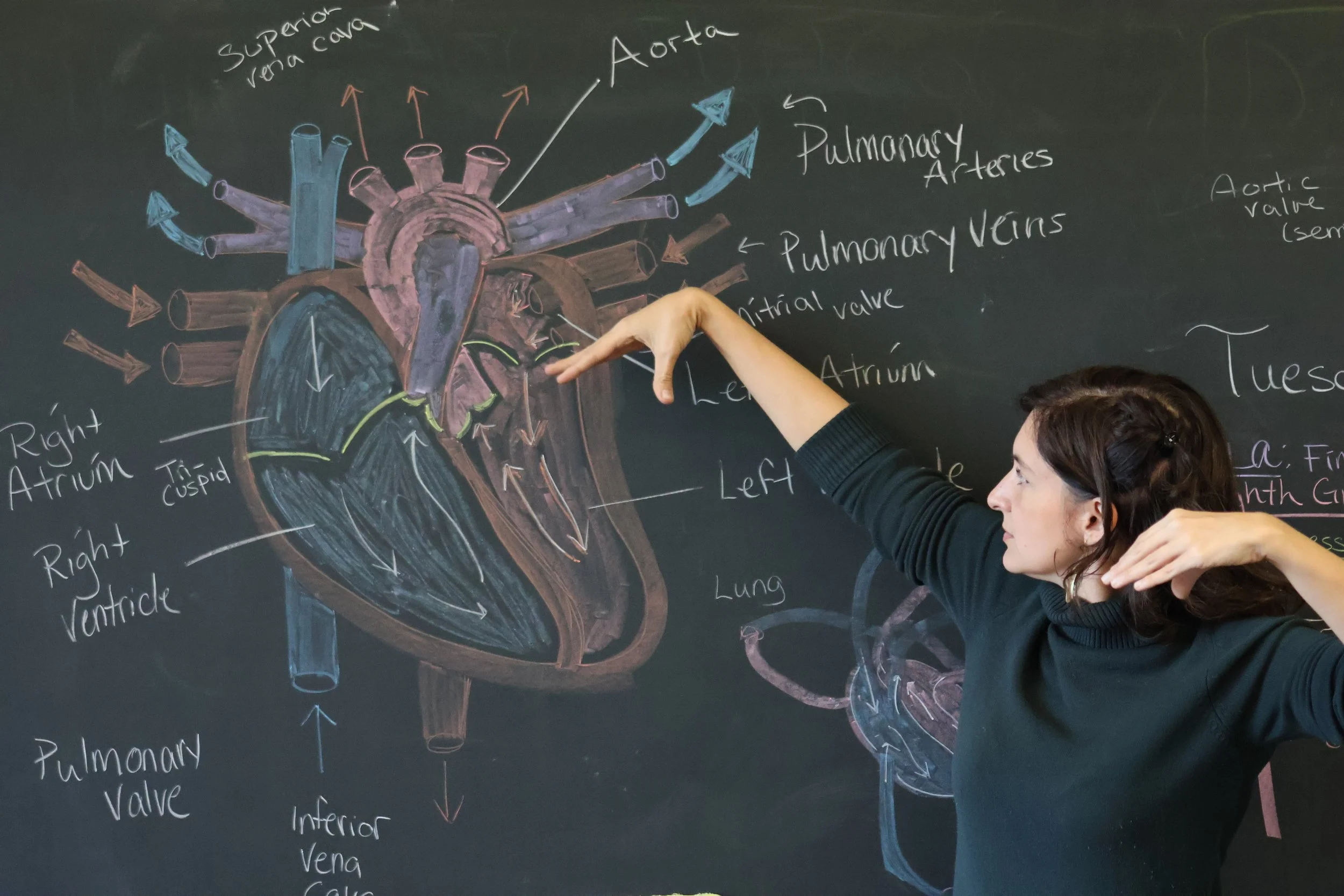
It all starts in our gorgeous, home-like, soothing preschool and kindergarten classrooms, with a focus on outside time, meaningful work, and learning to be in community with others. Children aged 3-6 follow a gentle rhythm of free play, guided activities, and rest. Teachers lead a daily circle time of song, poem, dance, finger-play, and story that builds pre-literacy, number sense, and gross- and fine-motor skills. A daily puppet show with handmade puppets celebrates the seasons, imparts rich language and mental imagery, and fosters the development of attention and focus. Children engage with purposeful tasks for the community like gardening, cooking, table-setting, cleaning, grain-grinding and wood-splitting. We build resilience and deep belonging in nature by spending ample time outdoors in all seasons and most weather. Daily transitions are led through song, and seasonal changes are celebrated with crafts, stories, and music.
Our elementary students take off with academics infused with art and music, guided by fantastic teachers, not screens. They start their day with 2 hours of interdisciplinary study on a theme, like “geometry,” or “Yoruba mythology,” or “zoology,” or “trickster tales from around the world.” These themes change every 3-4 weeks, and are designed by the teacher to meet the child’s specific stage of development in each year elementary school. Learn more about each year’s curriculum here. Students play pentatonic flute and recorder in the lower grades, and begin a string instrument in grade 3. The afternoons bring a rotation of special subjects: farm & land stewardship, Spanish, movement & games (PE), handwork (fiber arts), visual arts, music theory & choral singing, and string ensemble. Students engage deeply with Restorative Practices to build community, learn social skills, and develop responsibility and accountability. They go outside in all seasons and weather for two breaks each day, as well as for applicable class work in PE, farm, and science classes.
Middle school students prepare for high school with math and science Regents exams, Spanish 1 equivalency, 6 years of string instrument ensemble, the production of a full-length Shakespeare play, and a technology curriculum for ethical entry into the virtual world. They take on more responsibility in their daily school chores, their farm tasks, and for their lower-elementary (1st-3rd grade) buddies. While carrying a full course-load of world history, hard sciences, higher math, and literary studies, our 8th graders also design, implement and present a year-long independent research project. Our unparalleled middle school staff holds our eldest students lovingly as they navigate their changing social and inner landscape. Our graduates advocate for themselves and others, know how to meet challenges with grit, still find joy in learning, and face the future with competence and good humor. They join an international community of life-long learners.