
"Is Waldorf just for little kids?" A Conversation With Our 8th Grade Teacher
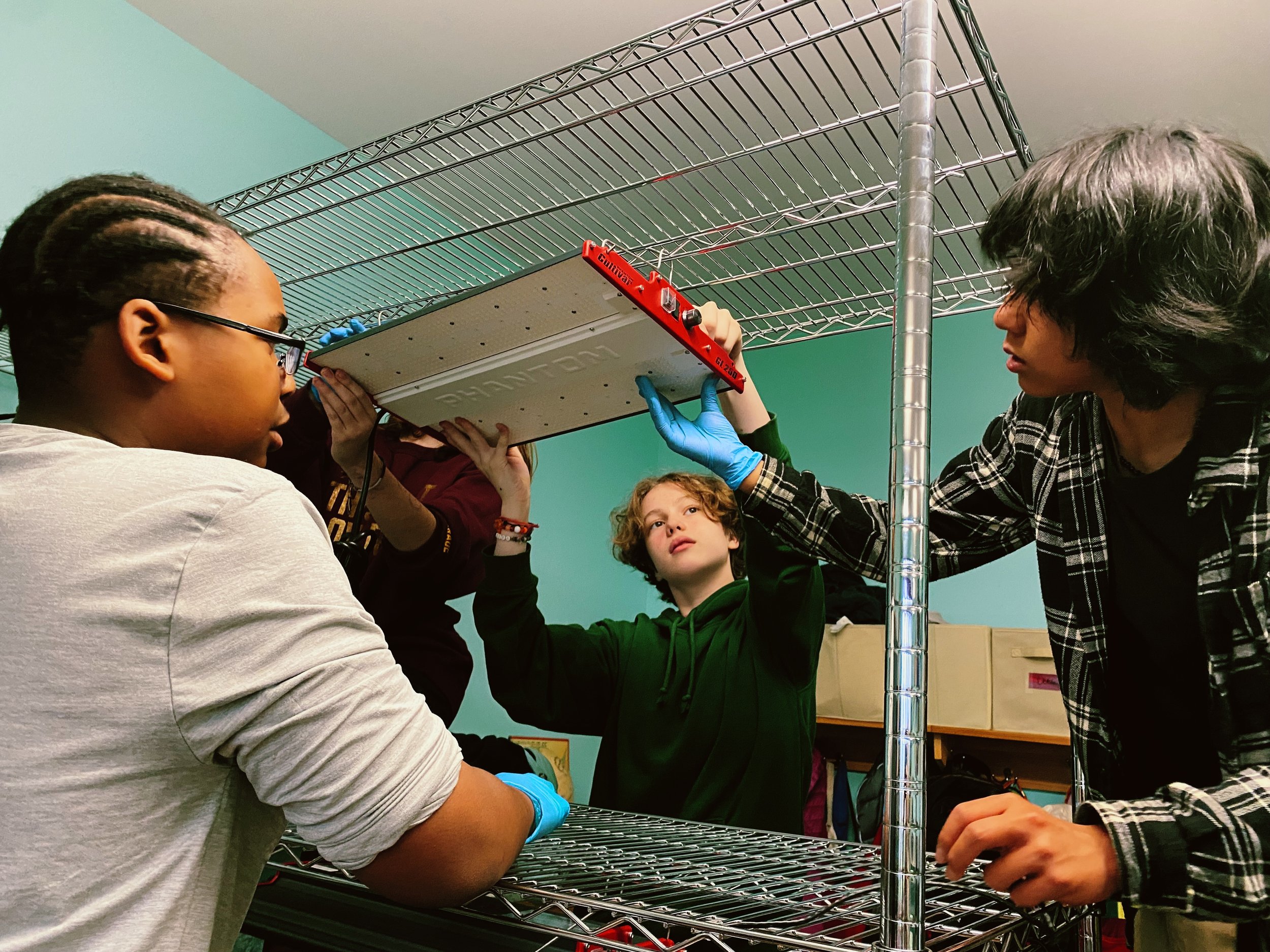
Early childhood is just the beginning of the journey at Ithaca Waldorf School. For students in middle school, the benefits of Waldorf education become richer and more meaningful every year.
When visiting Ithaca Waldorf School for the first time, many prospective parents immediately feel that their child will thrive in our joyous, play-based preschool and kindergarten community. From the smell of oatmeal simmering on the stove to the seasonal songs we sing, it’s easy to see how our early childhood programs welcome and nurture the young child.
Early childhood is just the beginning of the journey, which grows and transforms with children as they age into our elementary and middle school. Just like our preschool and kindergarten teachers, grades school faculty are specially trained to educate children through each stage of development, thoughtfully fostering each students’ capacity to learn, think creatively and independently, and connect with their class and community.
8th graders at Ithaca Waldorf School are shining examples of the skills and character we develop through our elementary and middle school program. As they enter adolescence, our students stand out as well-rounded, well-prepared, and fiercely curious about the world around them. Benefitting from a small and supportive school community, they are confident in themselves, kind to each other, and resilient in the face of challenges.
How does Ithaca Waldorf School foster these qualities—and what makes it worth sticking around for? We talked with 8th grade class teacher and middle school specialist Victoria Dehan about the Waldorf curriculum, what makes our middle school program unique, and how we prepare students to excel in high school, both academically and socially.
A Program That Grows Alongside Its Students
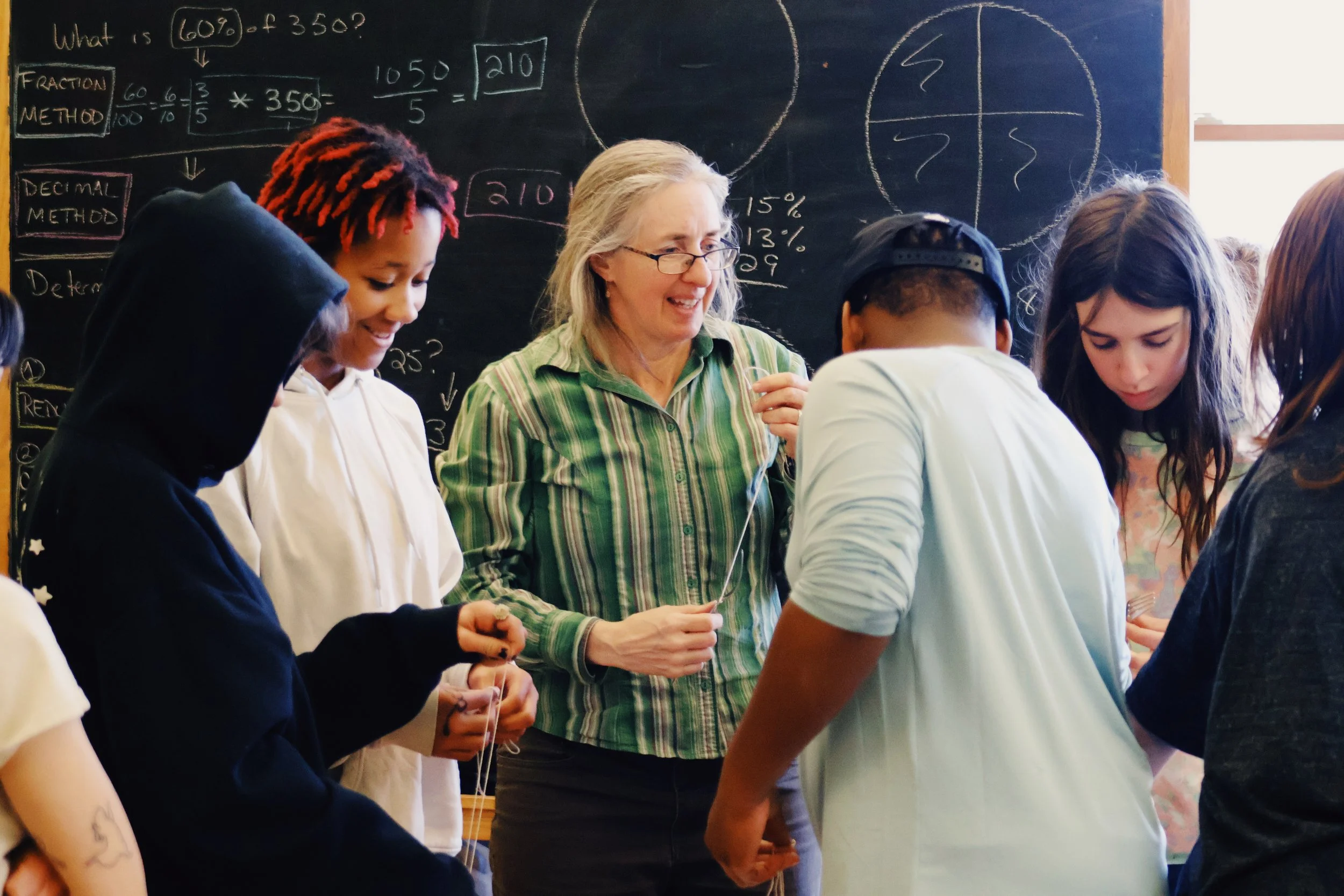
Waldorf education is designed to unfold over time, growing in depth and complexity with every school year. “People often talk about the Waldorf curriculum as a spiral,” says Ms. Dehan. “In each grade, students are revisiting things that they've learned before, but with a deeper level of understanding. This is true in everything, from math to knitting and handwork.”
This gradual build-up of knowledge means that “Waldorf students graduate with a really robust, intensive understanding that you don't find in public schools.” Even more powerful, topics in the curriculum reflect Waldorf teachers’ deep understanding of human development, explains Ms. Dehan, who studied child development as part of her Masters in Education program at Hunter College in Manhattan.
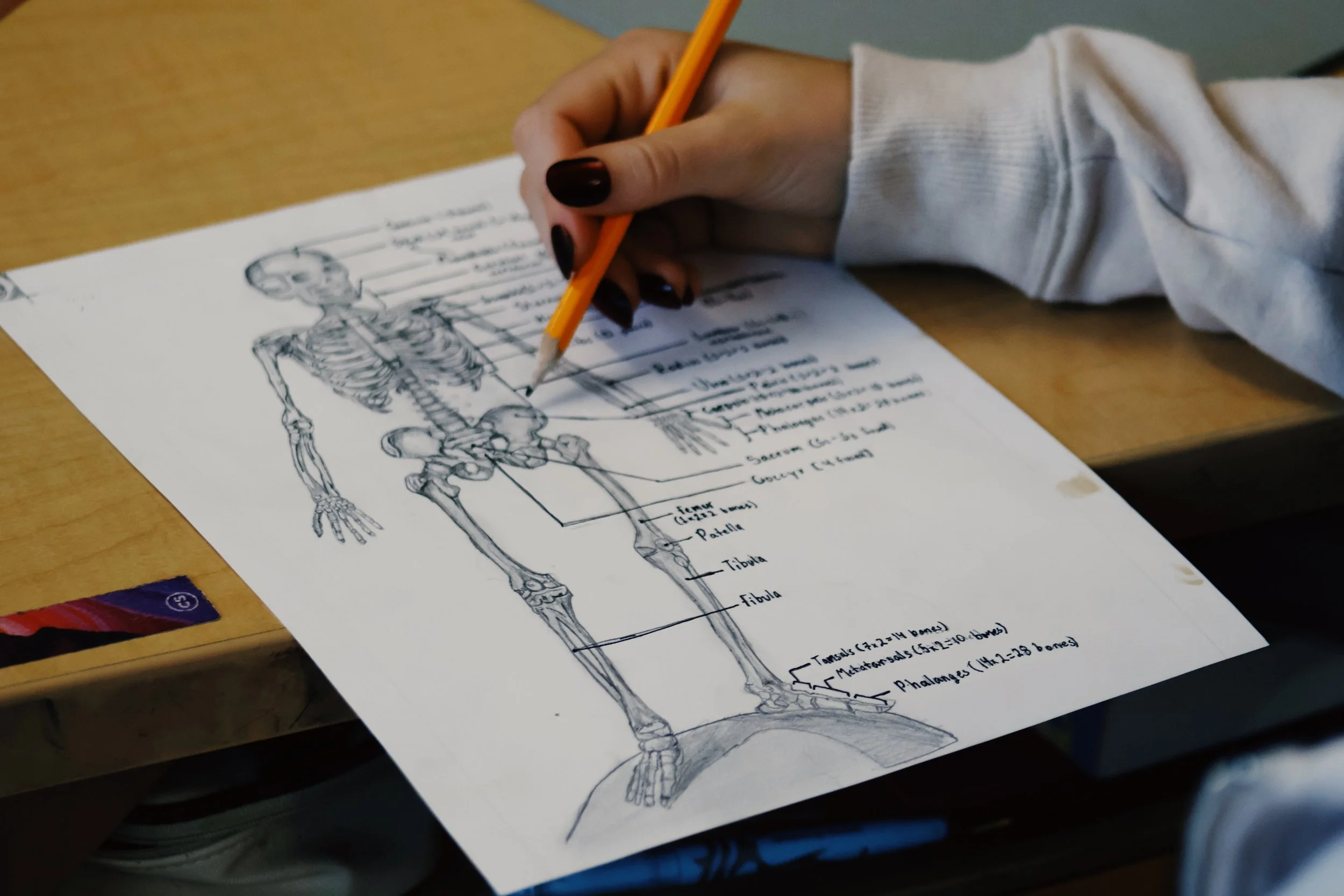
For example, learning about agriculture, cooking, and shelter-building is deeply invigorating for increasingly independent 3rd graders, who love doing things for themselves; in middle school, the 8th grade study of human physiology is particularly relevant to students who are experiencing or approaching puberty. “My favorite example is teaching the history of revolutions in the 7th and 8th grade,” Ms. Dehan says. “At this age, students are trying to understand who they are by separating themselves from things, and this often takes the form of being anti-authority and looking to rebel.”
All Waldorf schools follow the same framework of curriculum themes for each grade level, but teachers decide individually what material to bring to their class. At Ithaca Waldorf School, teachers present topics that "mirror" what the class is experiencing while also providing "windows" into other perspectives. This practice creates “an inner emotional connection to a topic that is meaningful in a different way” from what you find in a mainstream program, says Ms. Dehan.
A Well-Rounded Liberal Education
Studies of high-performing educational systems around the world have found that the most effective programs are built on a well-rounded, comprehensive, and content-rich curriculum in the liberal arts and sciences. At Ithaca Waldorf School, our broad-based elementary and middle school curriculum prepares students to explore a range of areas—and to make connections between them.
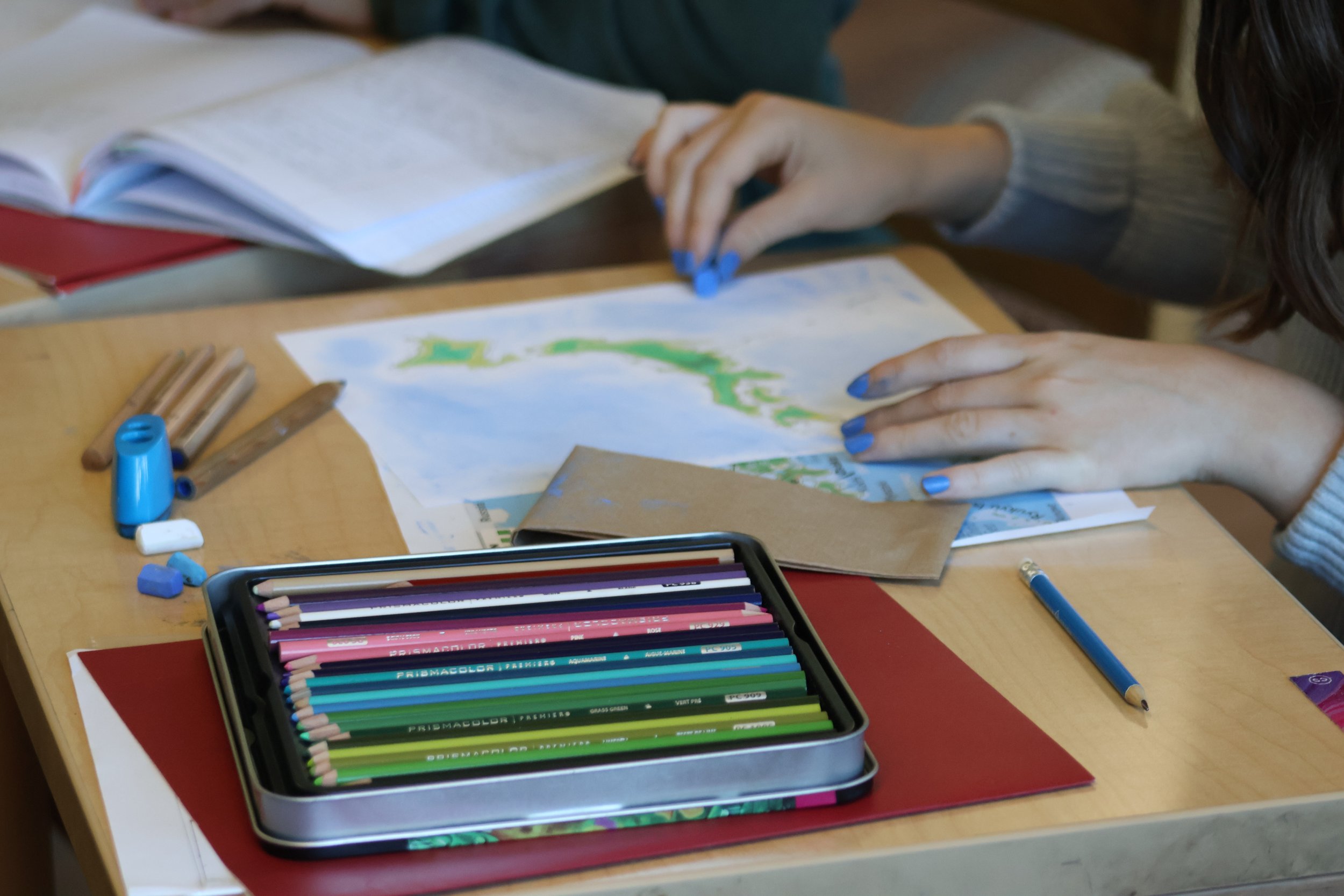
Starting in 1st grade, the core curriculum is a blend of language arts, mathematics, science, social studies, geography, and art, delivered in tandem with subject classes in choir, instrumental music, handwork, movement, Spanish, and farming, taught by a team of specialty teachers. In the early grades, the emphasis on multisensory activities, creative expression, and cross-disciplinary perspectives to teaching, help promote retention and connection to material. As students grow older, they are able to engage in increasingly sophisticated thinking, exploring the relationship between fields of study.
“In the cross connection, the way that we bring all of the subjects together deepens the students’ experience,” Ms. Dehan explains, noting how the program weaves distinct threads together over ages and grade levels. “Handwork and knitting alongside math deeply reinforces their math facts and their understanding of numbers and patterns. In the upper grades, when students learn about computers and the history of computer programming, they learn how binary algorithms came from woven patterns,” she explains.
Motivated and Resilient Learners
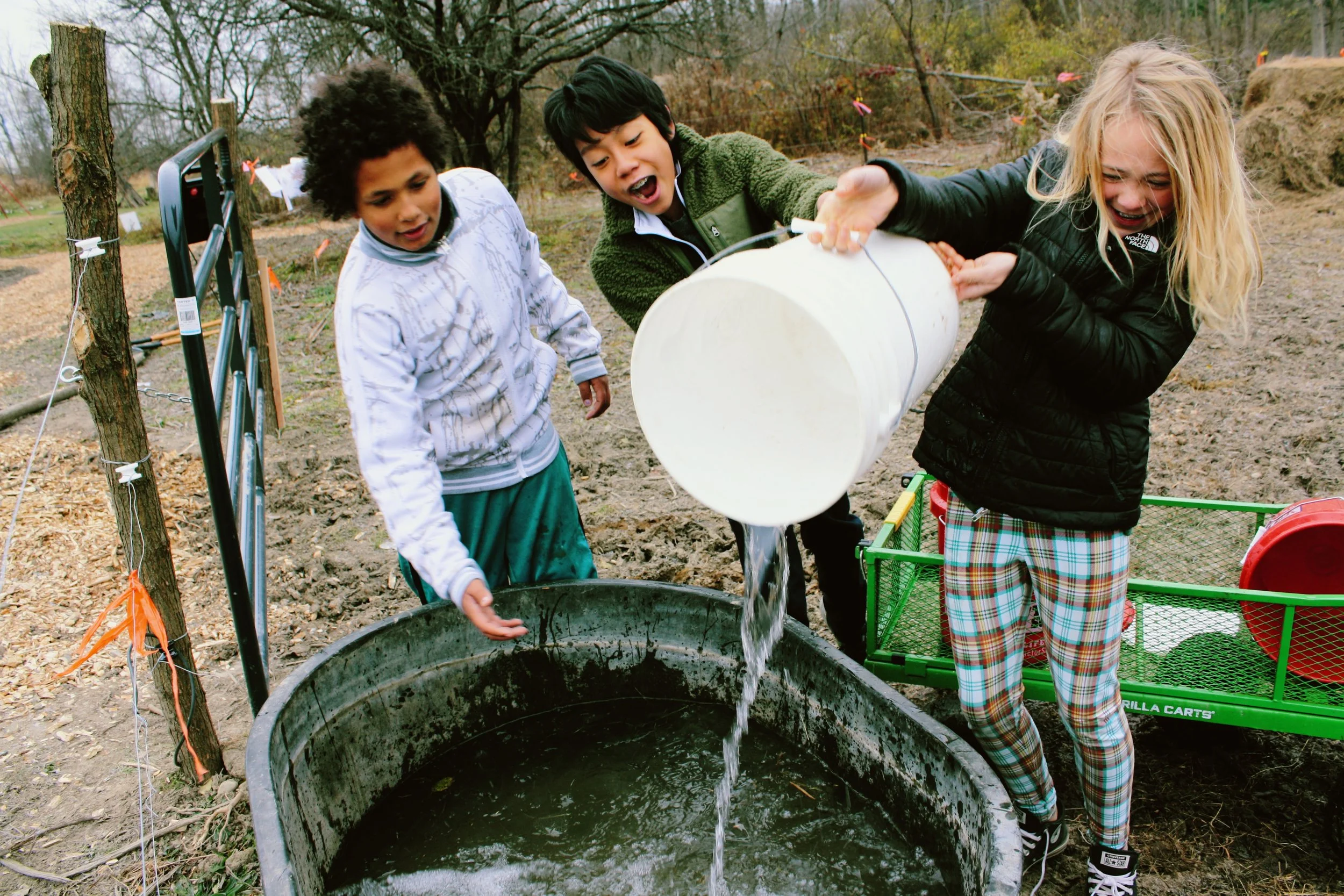
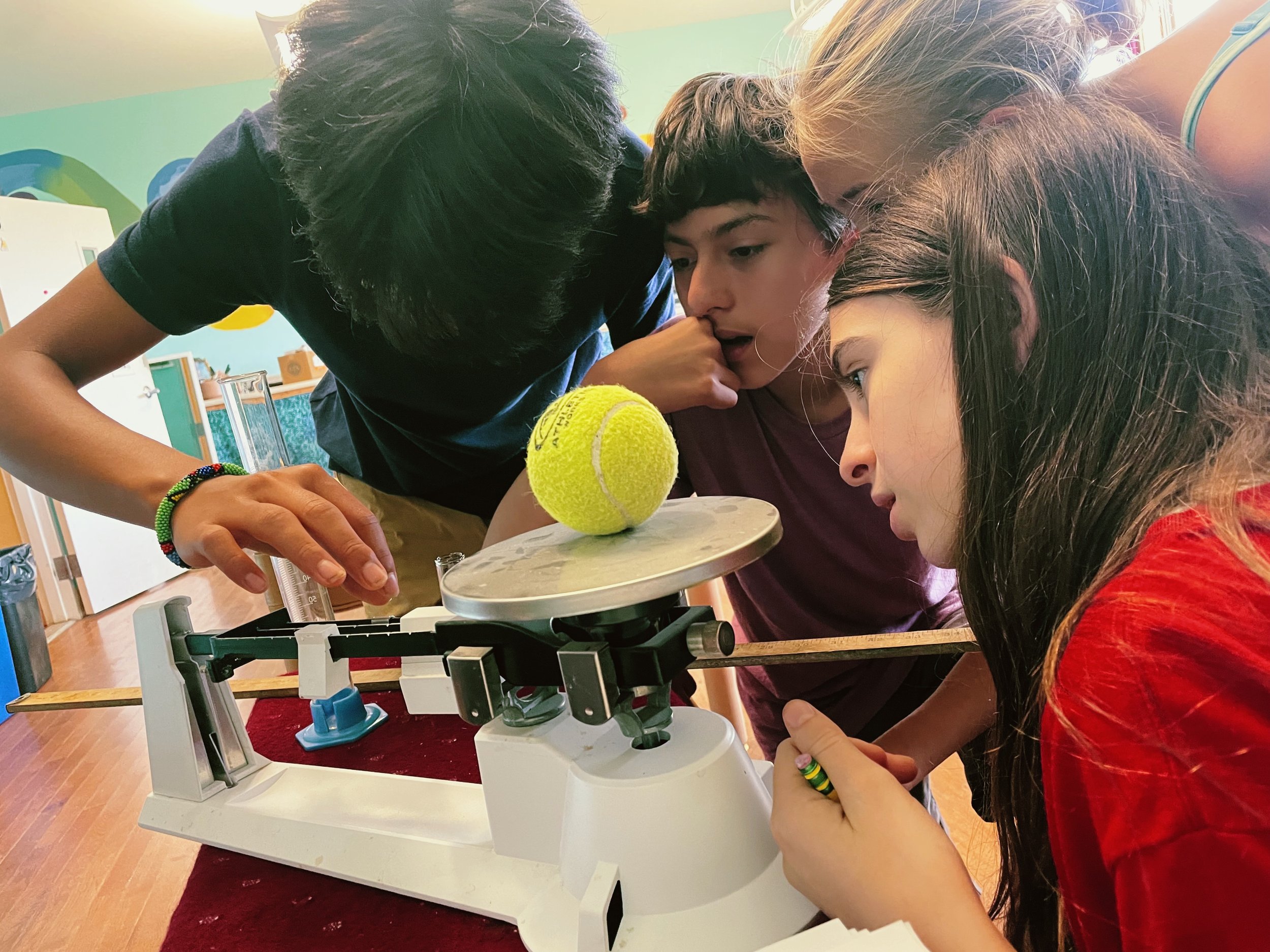
As the academic program becomes more rigorous in middle school, our interdisciplinary approach challenges students to step outside their comfort zone. “They have music classes, they play instruments, they have to knit, they have to paint, they do folk dancing—and then they also have to work pretty intensively in the sciences, for example,” says Ms. Dehan. “They're exposed to a number of different things that, for a middle-schooler, could make you feel vulnerable.”
Over time, learning to persevere through a complex topic—or to stick with something when it doesn't come naturally—builds “a really deep sense of confidence and grounding” in Ithaca Waldorf School students. When students are able to become comfortable with struggle, Ms. Dehan says, “That gives them courage to try new things.”
As they prepare for the challenges of high school, IWS students benefit from “an understanding of self that is deep and meaningful because of how we teach, especially in 8th grade,” says Ms. Dehan, who points to the 8th grade project, a self-directed research project that students plan and execute over the course of the school year. Ms. Dehan notes that the 8th grade project serves not only as a way for students to explore their interests, but to develop key organizational and time management skills, and take ownership of the learning experience.
“Everybody hits the same kinds of experiences during the eighth grade project where they reach goals and they feel really elated, then they hit a wall and they struggle and they're frustrated. Maybe they get a writer's block and they have to move through,” she says. “The purpose of the experience is to explore themselves and learn about who they are and how they work.
Socially Adept and Compassionate Kids
“You hit adolescence and suddenly your attention turns inwards,” says Ms. Dehan. “You've got questions about who you are and what you like and where you fit into the world.” At this age, a supportive social atmosphere, alongside opportunities to develop emotional maturity and self-awareness, are essential to healthy development.
Social-emotional learning is a strength of the Ithaca Waldorf School program. SEL is woven into the curriculum at every grade level, starting in preschool, where children learn to listen, share, empathize, cooperate, and communicate through free social play, guided by warm adults who step in and coach social skills as needed. These skills continue to build throughout elementary school, where group work, alongside required participation in performing arts and athletics, encourage students to hone their collaborative, interpersonal skills. Visitors often notice our students stand out for their kindness, their groundedness, their confidence in speaking up in the classroom, and in talking with adults.
By middle school, students have formed a respectful and close-knit class community, built around shared values. Guided by their teachers, middle schoolers “take ownership of the decisions about how things are resolved in the classroom,” including following class agreements and working together to resolve interpersonal conflicts between peers. The small and close-knit nature of our program provides a richer alternative to a large public school classroom, teaching students to appreciate each other, stick up for each other, and work together within an incredible diversity of race, class, gender, family structure, religion, and more.
“Learning how to be in community and learning how to be with people who are different from you” are among the most powerful lessons for middle schoolers at Ithaca Waldorf School, Ms. Dehan says. “While watching things resolve in social-emotional conflict and interpersonal relationships, students build a really deep sense of confidence and grounding.”
An Intentional Approach to Tech
Our approach to social-emotional learning includes a thoughtful approach to technology and media, which begins in early childhood and slowly builds through middle school. As an increasing number of schools are implementing phone bans, we have never allowed cell phones or personal devices at Ithaca Waldorf School (unless they are required for assisted learning, of course!), eliminating distraction and placing the emphasis on discussion and group work in the classroom.
We aren’t anti-tech; we believe in teaching students about it at the right time. Our slow-tech approach allows our students to build their attention span, ability to focus, and social-emotional skills during a critical window in their development when growth in these areas is most easily attained.
By middle school, most students have the critical thinking skills and emotional maturity to learn about tech and its responsible uses, which we do through Cyber Civics, “a three-year curriculum that teaches them how to navigate technology.” This teacher-led, discussion-based curriculum covers a wide range of topics in media and technology, including online communities, addiction, propaganda, consent, verifying sources, anonymity, and more.
“By the time they do have a phone or they're exposed to social media, they've already been trained in how to use their critical capacity to be conscious consumers,” explains Ms. Dehan. “I've had a lot of conversations with middle schoolers as they've watched their own relationship to technology evolve. There is a lot of intense gratitude for the tools that they've been given.”
Uniquely Prepared for What’s Next
When Ithaca Waldorf students move on to high school, they are ready—and eager—to take the next step on their journey. “All you have to do is look at our alumni,” says Ms. Dehan. “That is where you will see the successes. Our students are well-prepared, both academically and emotionally.”
During their years at Ithaca Waldorf School, they have been challenged academically, socially, and personally. They have learned how to work hard, overcome challenges, and think creatively and critically. They combine a breadth and depth of knowledge with a well of curiosity and joy of learning. They are confident thinkers, strong writers, experienced public speakers, and enthusiastic makers and creators.
Perhaps most importantly, Ithaca Waldorf School graduates demonstrate the maturity, resilience, and self-knowledge they need to embrace life’s joys and challenges. “The thing that gets our students through is the ability to not feel fearfully intimidated by challenges because they've had such intense experiences with that in the Waldorf school already,” says Ms. Dehan. “Their confidence, their creativity, and their problem-solving is what really allows them to take control of the things that are difficult.”