
“Why do Waldorf Schools start 1st Grade later than public schools?”
The 6 Most Important First Grade Readiness Skills Your Child Will Learn in Kindergarten
We spoke with Ithaca Waldorf School teachers Larisa Kuznetsova and Lauralee Guttridge about how our kindergarten program prepares students to excel in elementary school.
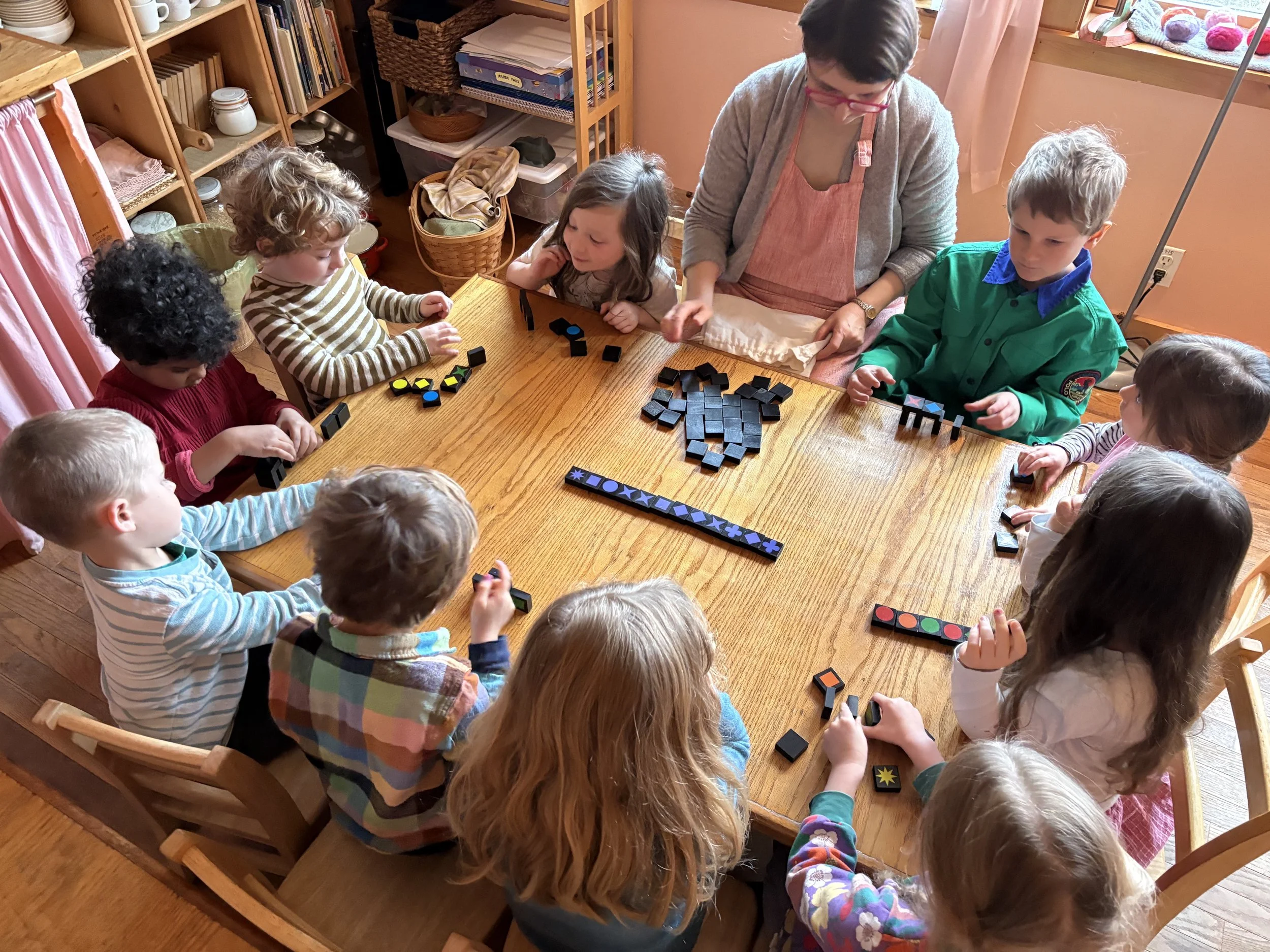
The early years of a child’s life are a time of tremendous growth and development. Hoping to capitalize on the young child’s natural ability to learn, many schools have introduced increasingly rigorous academic instruction to kindergarten while reducing time for exploration and play—even though research overwhelmingly shows that early academics are not linked to long-term learning benefits and often have negative academic, social, and behavioral consequences.
At Ithaca Waldorf School, our kindergarten program is designed to meet and nurture children during this powerful phase of development. Most of our kindergarteners are 5-year-olds who will turn 6 during the school year, which in some cases makes them almost a year older than public school kindergarteners. Waldorf schools around the world have found that this “extra year of kindergarten” is the best year to develop a foundation in preacademic skills that will set them up for success in 1st grade and beyond.
Based on the most recent research into how children learn, our program is rich with stories and songs, time outdoors and lots of imaginative child-led play. Rather than rush into early academics, our holistic approach gives children time to reach the cognitive, social, emotional, and physical milestones they will need to thrive in elementary school. The result is children who reach first grade both ready and eager to learn.
How do we do it? We asked veteran kindergarten teacher Larisa Kuznetsova and 1st-2nd grade class teacher Lauralee Guttridge to tell us more about what children need to succeed in elementary school—and how our kindergarten program provides it.
Skill #1: Physical Readiness
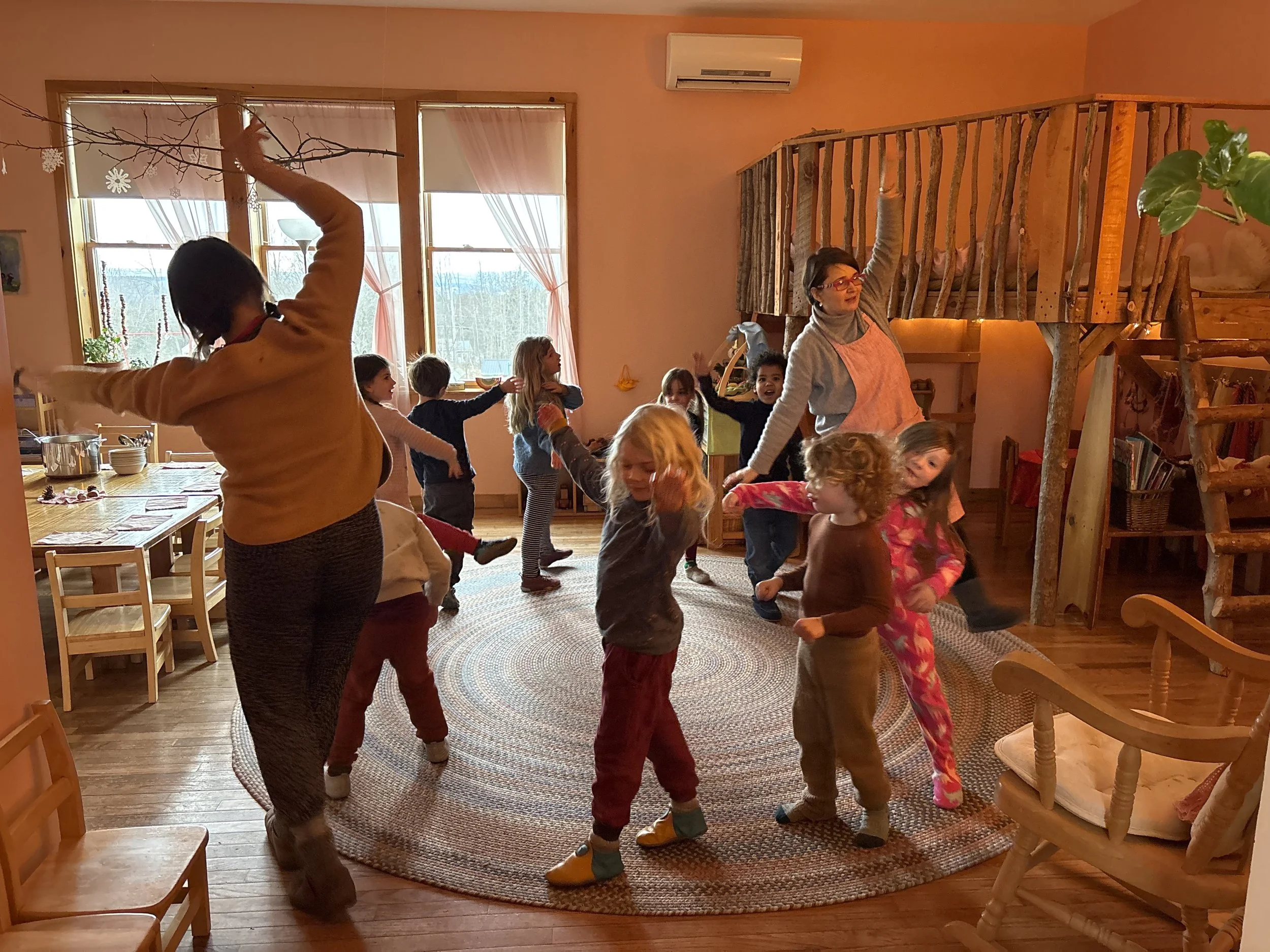
It can be easy to overlook the physical demands of a classroom, but for young children, basic requirements like sitting quietly at a desk or holding a pencil can be challenging. Developing basic mastery over the body—including an ability to link body and mind—is the first and most fundamental requirement to succeeding in first grade academics.
“The huge difference between first grade and kindergarten is that the day is more structured,” explains Ms. Larisa. “First graders have many teachers, and they have to very quickly adjust from the morning lesson to recess to handwork to Spanish. They should have stamina to do that. That is why the physical development of the body is very important. We would like to see the children learn when their body is ready for formal learning.”
When preparing students for first grade, Ithaca Waldorf School teachers look for a wide range of physical characteristics, from eye tracking and body awareness to the ability to cross the midline when picking up objects or drawing. “If children can cross the midline, then when they sit down at a desk to hold a pencil and write, they can go smoothly from one side of the paper to the other,” explains Lauralee Guttridge.
How do we promote physical readiness?
At Ithaca Waldorf School, kindergartners have ample time to engage in free, uninterrupted play, the best way for children to test and develop their physical capacities. In particular, outdoor play—a staple of the kindergarten day, rain or shine—has been shown to have profound benefits for physical health and well-being in young children.
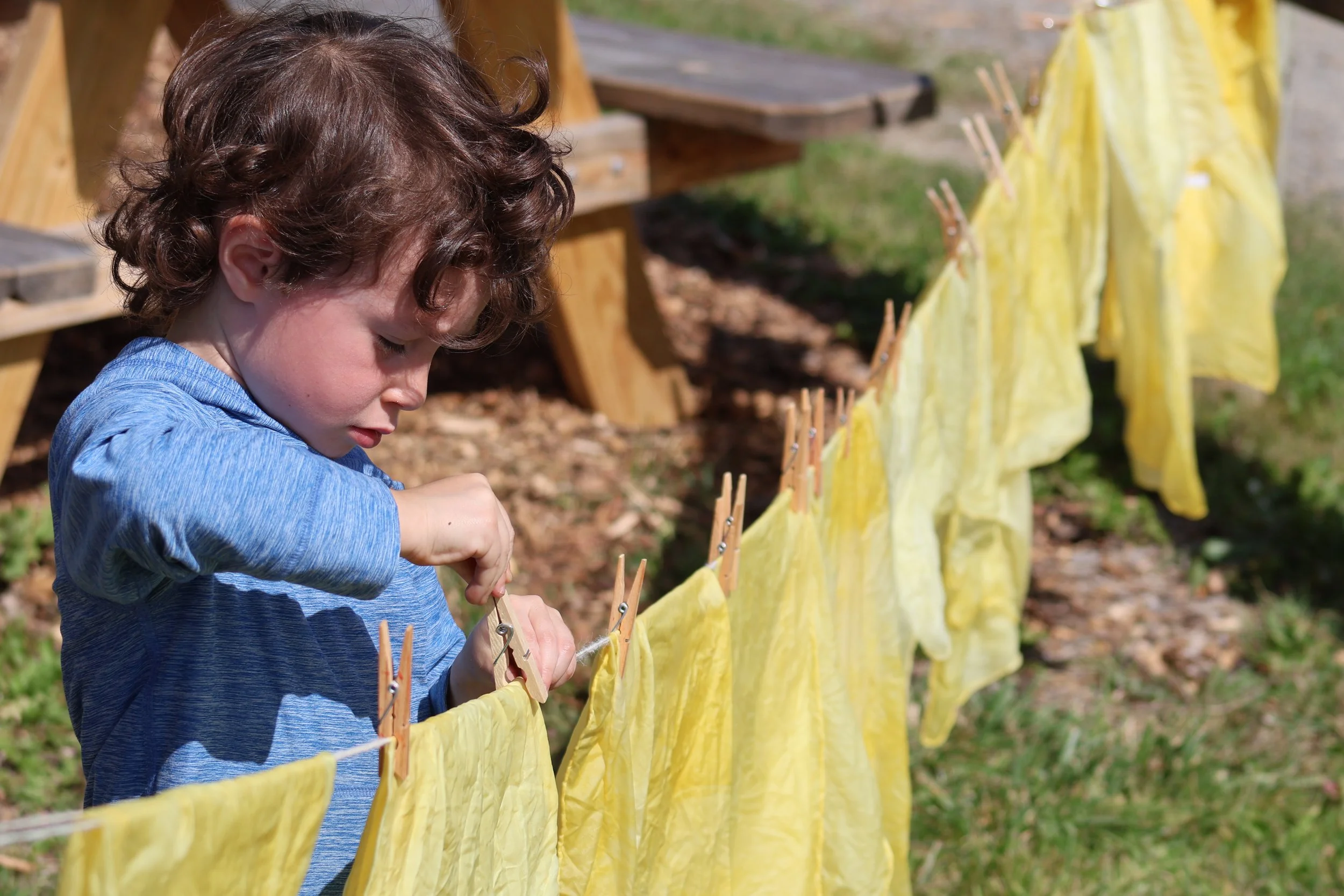
In addition to unstructured activity, kindergartners are given purposeful tasks in the classroom and garden, including chores like chopping vegetables, washing dishes, or sweeping. These activities help build motor skills and promote sensory integration, in addition to building confidence, competence, and a sense of satisfaction in children. Kindergarten teachers also lead children in movement activities that encourage the development of both fine and gross motor skills during circle time.
“Circle time is a holistic body, social, emotional, and cognitive exercise,” says Lauralee, who notes that kindergarten teachers are “very intentional about the movements” that accompany stories and songs during group activities. “We make sure that the child can skip, gallop, hop on one foot, on another foot,” Larisa adds. “And not only can they do this movement on their own, they can also imitate the teacher at a particular time.”
Skill #2: Executive Function, Working Memory, and Focus
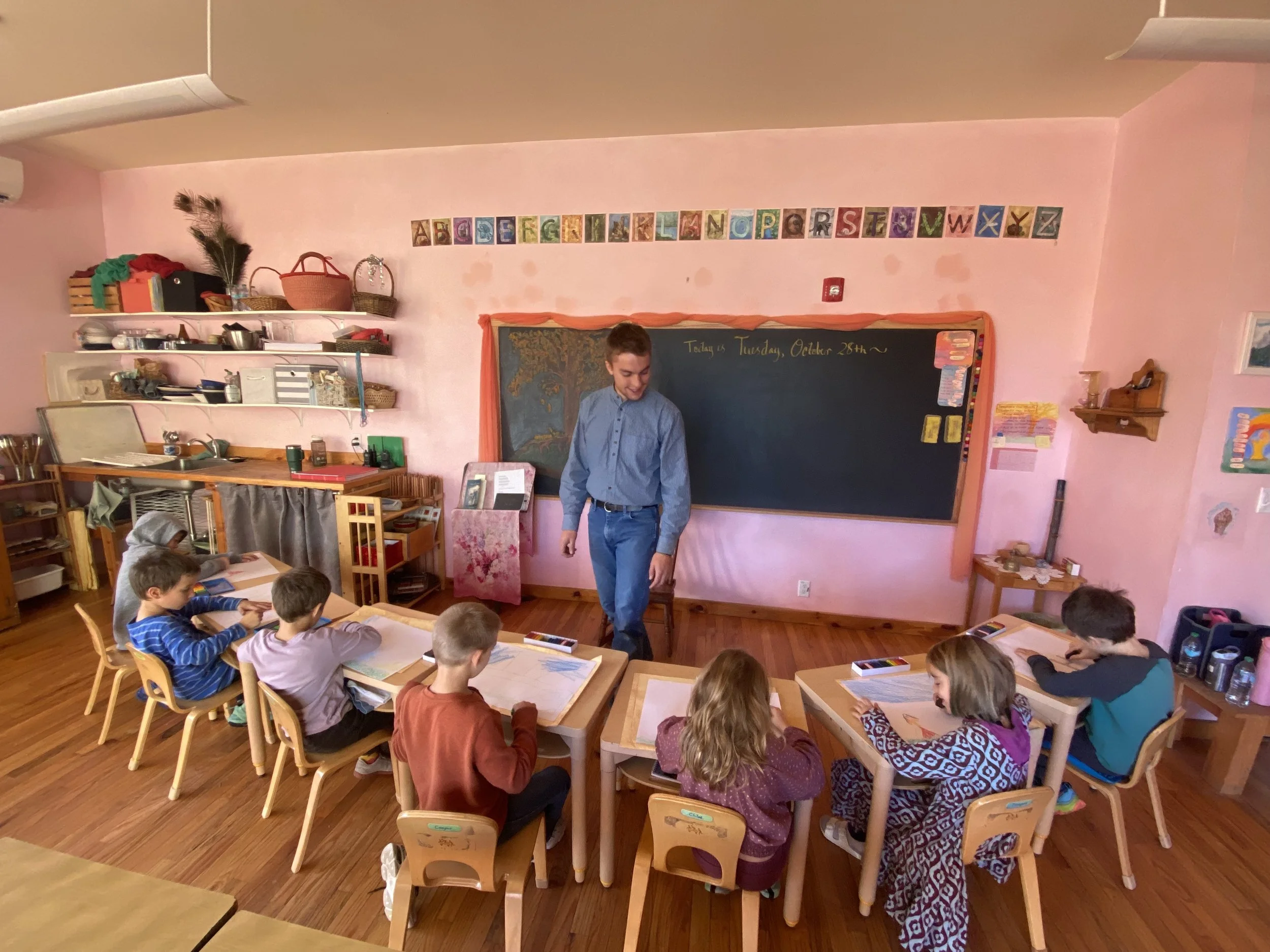
“In first grade, children need to remember and recall,” says Lauralee Guttridge. “A big piece of first grade readiness is seeing if they can hear something, learn something, take it into their sleep and forget about it, and then find those inner forces to recall it the next day.”
In addition, first graders need basic executive functioning skills and working memory—a mental “scratchpad” that allows them to follow along with daily activities. Middle childhood, which begins around age 6, is a time of tremendous neurological development, when connections in the prefrontal cortex are rapidly growing.
“In first grade, students receive instructions like, ‘Go to your desk, get out your crayons, get out your book, and write your name.’ Those are a lot of steps,” Lauralee explains. “Part of the 1st grade readiness assessment is testing how many pieces of information can hold and then follow through with.”
How do we promote executive function, working memory, and focus?
In the Waldorf classroom, consistent daily routines help develop cognitive connections and working memory, making it easier for children to follow through with tasks and build their executive functioning skills. Kindergarten teachers also lead children in activities that enhance their ability to recall.
For example, Larisa asks children to play a game in which they each name three animals, without repeating any animals that were already mentioned. “They have to be focused and pay attention to what their friends are saying,” Larisa explains, which helps “develop prolonged attention span and an ability to pay attention to the details.”
Storytelling is another opportunity to build memory and mental picturing skills. “Teachers tell the same story or fairy tale for the whole week to give the kids plenty of time to really absorb the imagery, to think about it, and to feel the characters and the setting,” Lauralee says. “In kindergarten, stories get bigger, with more characters and settings, but with the same repetition to really build up that memory piece.”
Free, imaginative, and social play is also essential in building connections in the prefrontal cortex, the brain’s executive control center, in addition to giving children an opportunity to practice planning and organization. “Children come up with the idea, like we can play house,” Larisa explains. “For the house, we need lots of chairs in a circle. We need the sheepskins in the bedroom. They come up with the idea, and they implement their idea.” In fact, she says, “Some children can talk and plan and plan until playtime is over!”
Importantly, Lauralee notes, “There's a point where kids in the transition from kindergarten to first grade get bored.” For example, “They are no longer okay with hearing the same story all week long.” But both teachers insist that boredom isn’t something to be avoided. In fact, boredom helps children build valuable skills, including an ability to deal with frustration, solve problems, and think creatively. It’s also a very clear sign of neurological shifts in memory and intellectual capacities that our teachers look for as a sign of readiness to matriculate to first grade.
“Boredom is such a big piece of kindergarten,” Lauralee says. “You explore something until you've explored it to its full possibility, and there's nothing else to do. Now you’re just bored with it… until, oh, wait, no, there's something more I can do with this!” Our teachers are careful to protect this process of boredom leading to creativity… or even simply to contentment–when an adult solves boredom for a child, they may be enabling a cycle of addiction to instant gratification, or leading to an ever-increasing need in the child to be entertained.
Skill #3: Emotional Intelligence and Maturity
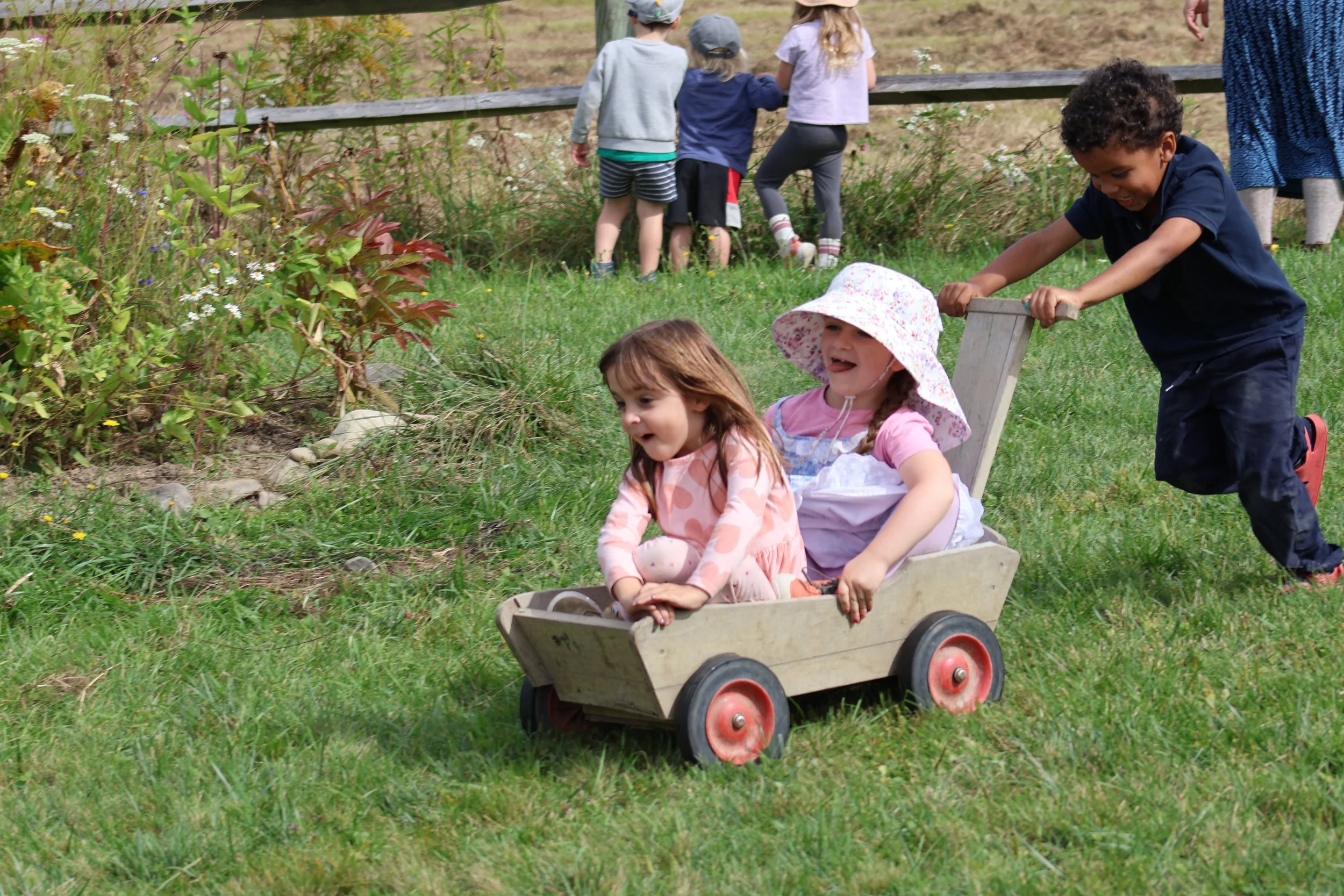
A classroom is an inherently social environment. To succeed in first grade, students must be able to listen to and interact with their teacher, cooperate with peers, and exhibit self-regulation and emotional maturity during class time. Neurological changes help to accelerate these capacities around age 6, when children begin to show a “greater capacity to reflect on their feelings and modify them when needed,” according to writer David Robson at the BBC.
“When we think of first grade, we think of academics, but you have to understand the social piece,” Lauralee says. “School isn’t just one student at a desk, learning what they want to learn. The teacher is leading the class through specific activities. You have to be able to sit and listen and engage with others sitting next to you, who are trying to do the same thing.”
How do we promote social-emotional maturity?
Starting in early childhood, our school places tremendous value on building strong, trusting teacher-student relationships, in addition to encouraging group work and collaboration between students. Everything we do in kindergarten—from quietly listening to the teacher tell a story to waiting to eat their snack until everyone is served—is designed to reinforce the emotional intelligence and self-regulation skills children will need in elementary school.
Free play is likewise essential in promoting a child’s social growth and self-regulation. During play, “Children have plenty of time to communicate with each other, to negotiate, to take turns, to resolve the conflicts,” says Larisa. It is this social maturity, Larisa continues, that really grows during the kindergarten year. “When children are given one more year, not being pressed by academic learning, they have more opportunities for emotional self-regulation.”
Skill #4: Phonetic Awareness and Pre-Literacy Skills
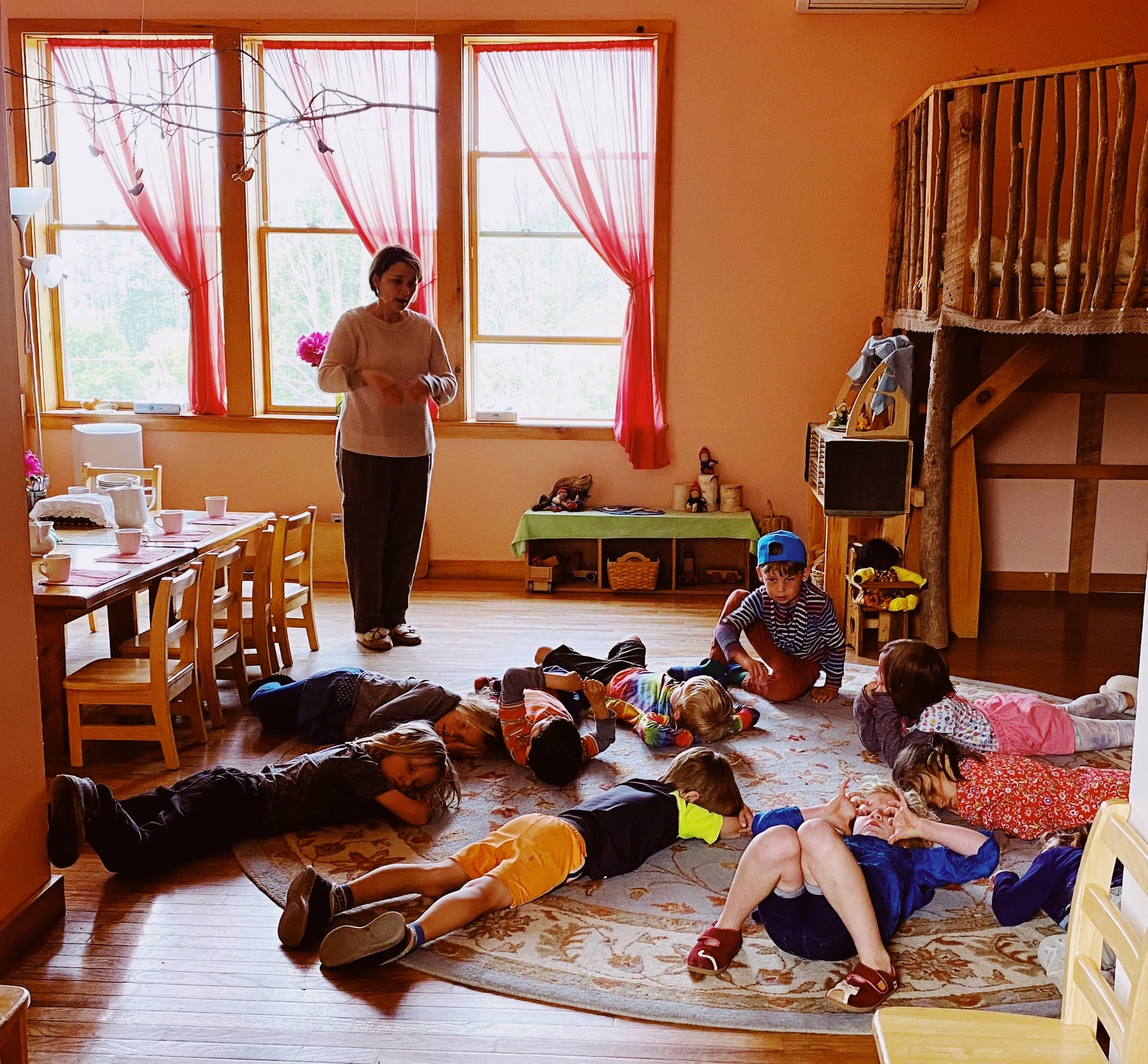
Building a strong foundation in language is essential to teaching literacy—and to instilling a lifelong love of reading and writing in children. In many cases, the rush to begin formal literacy instruction means essential pre-literacy skills are bypassed, creating more challenges for students over the long-term.
A strong vocabulary, the ability to listen to and comprehend a story, oral speaking skills, and phonemic awareness all contribute to a child’s ability to read and write. “Literacy is built up on tiny steps,” Lauralee Guttridge explains. “It begins with phonemic awareness. If you can't say a sound or hear the difference between a ph and a p, it will be much harder to then translate this symbol into a sound.”
How do we build pre-literacy skills?
At Ithaca Waldorf School, formal instruction in reading and writing begins in first grade, but literacy education starts in early childhood. Waldorf kindergarten classrooms are rich in high-quality language and story, laying the groundwork for a lifelong interest in reading and writing.
One of the most important ways our teachers do this is by telling stories with complex themes and high-quality vocabulary. Listening to stories, children learn to follow the narrative structure of a story, build compassion for situations and characters, and learn new words and syntactic structures. Importantly, they also develop the ability to build mental pictures, which is closely linked to early literacy.
Reading relies on both word comprehension—or the ability to translate written symbols into pronounceable words—and linguistic comprehension, which is the ability to understand a text read aloud. Research has shown that listening comprehension skills are directly related to reading comprehension in elementary grades and middle school.
In addition, teachers lead children in word games, such as “coming up with as many words as possible that start from the sound B—not the letter, but the sound,” explains Larisa. “The children come up with bridge, bread, butter. They have to develop the ability to listen to the sound before the abstract letter is introduced.”
And, of course, children use their most advanced oral communications skills during play with peers! “When children play and communicate through play, they are learning how language works and gaining an understanding of how to interact with other people. Eventually, children connect the meaning of spoken language to written language, which is the key to success in school,” write researchers Alissa Marie Mielonen and Wendy Paterson in the Journal of Inquiry & Action in Education published by SUNY Buffalo.
We see the effects of our students’ Waldorf kindergarten preliteracy education in our 3rd grade classroom: they memorize material like poetry and the script of their class play with ease, express deep empathy for the characters they read about in books, and write their own fantastic stories and lesson summaries.
Skill #5: Foundational Math Skills and Number Sense
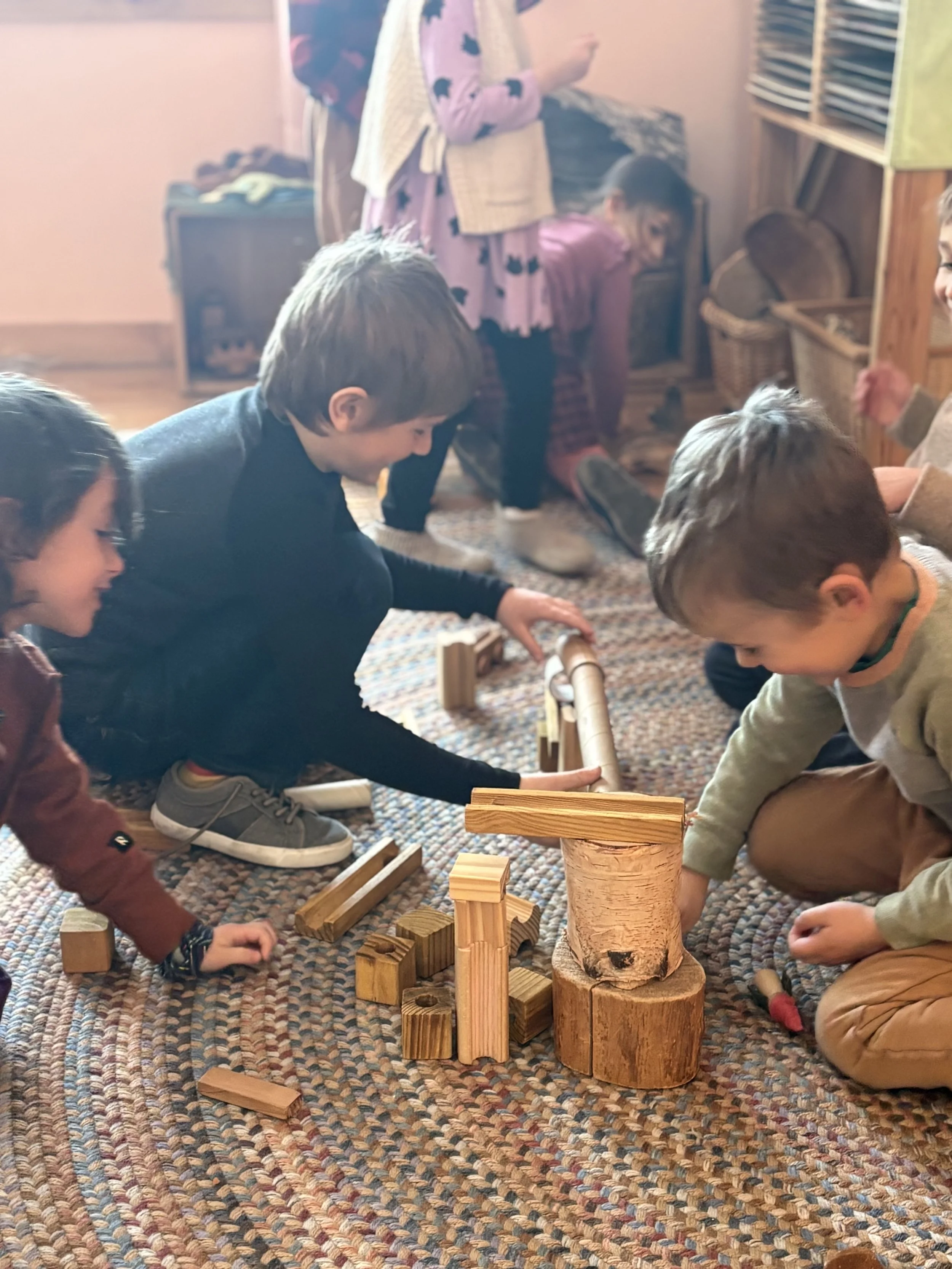
Like reading and writing, long-term achievement in mathematics can be linked to strong foundational experiences. Basic mathematics learning, including activities that require sorting, pattern recognition, and shapes, build a solid foundation for understanding formal mathematics in elementary school.
Perhaps most important is the development of number sense, the intuitive and flexible understanding of numbers and their relationships. Research has consistently shown that number sense is a strong predictor of future success in mathematics.
How do we build foundational math skills?
“Math is living in the classroom,” says Larisa, who explains that numbers are used frequently and naturally throughout the kindergarten day. For example, Larisa often tasks students with counting challenges, like “Today we have 10 students. Would you please set the table for 10 students? So they have to put out 10 placements and 10 cups.”
Other simple activities lay the groundwork for formal math learning. For example, putting away toys in the right place reinforces the ability to sort, while activities that encourage finger perception build cognitive skills. Even craftwork and drawing can create an opportunity for students to build spatial awareness and sense of balance.
Importantly, kindergarten is a time for “fostering an environment where exploration is valued and nurtured. Children learn that there isn't just one way to do something,” says Larisa. ”When we get into first grade and we're learning about math, right? Five isn't just five. Five is two and three. Five is four and one. Five is seven minus two. So it's building all of that flexibility in how we see.”
“In a study of 70 4- and 5-year-olds that Dr. Hirsh-Pasek co-published in 2013, she and her colleagues found that kids learned more about the features of geometric shapes when they played with the shapes compared with when teachers lectured to them,” reports the New York Times in the article Early Education Is More Demanding Than Ever, and Experts Have Concerns. “The kids who played with the shapes were also more likely to remember the details a week later.”
Skill #6 (and the Most Important of All): Deep Curiosity and a Desire to Learn
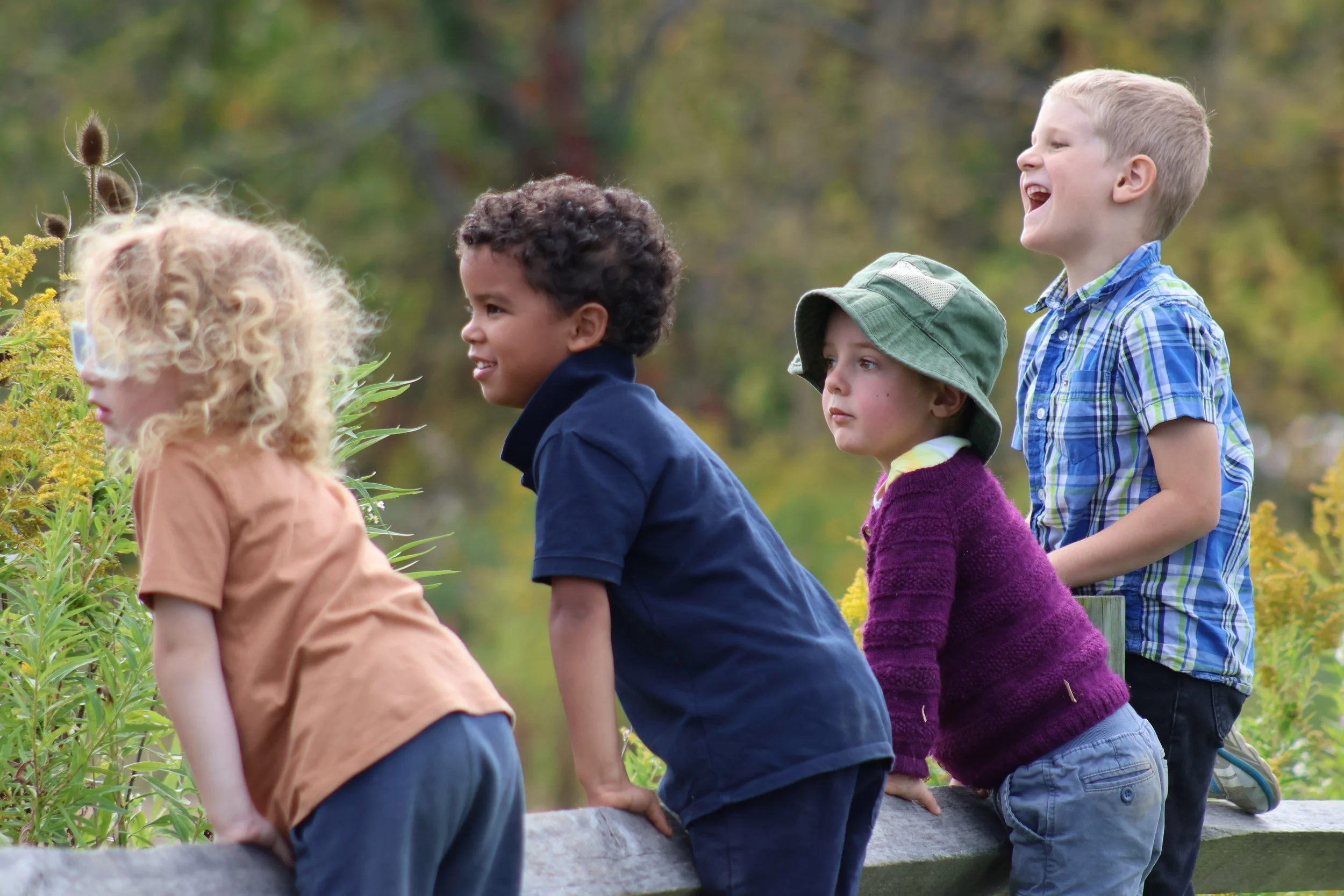
When you ask Lauralee Guttridge what skill is most important in early elementary school, she doesn’t say hand-eye coordination or an ability to count to ten. While those types of measurable skills are certainly essential, Lauralee says that being enthusiastic to start formal learning is what really makes a difference in the classroom.
“Learning becomes a chore if it's introduced too early or if it’s too systematic,” says Lauralee. With successful first graders, “There's this real excitement for the next step,” she says.
How do we promote joy, engagement, and a love of learning?
At Ithaca Waldorf School, we don’t rush childhood. Here, we know that taking the time to build foundational skills—and providing challenges that are appropriate for a child’s age and stage of development—leads to engaged, curious, and confident learners over the long term.
Our kindergarten program, which draws on the most recent research in education and child development, is highly effective in preparing students for the next step while simultaneously promoting confidence, camaraderie, and joy at school. Our kindergarten program gives children “the time to fully explore something and fully experience it—without being pulled off to the next thing,” says Lauralee. “Kindergarten is really that magical time of being able to deeply dive into something and take it to its fruition.“
Larisa agrees that refraining from formal academics in kindergarten has clear results over the long term. Having truly prepared for the challenges of school, first graders at Ithaca Waldorf School are “ready to jump into academic learning—they are so hungry for that.”