
“Are Waldorf kids ready for High School Science?”
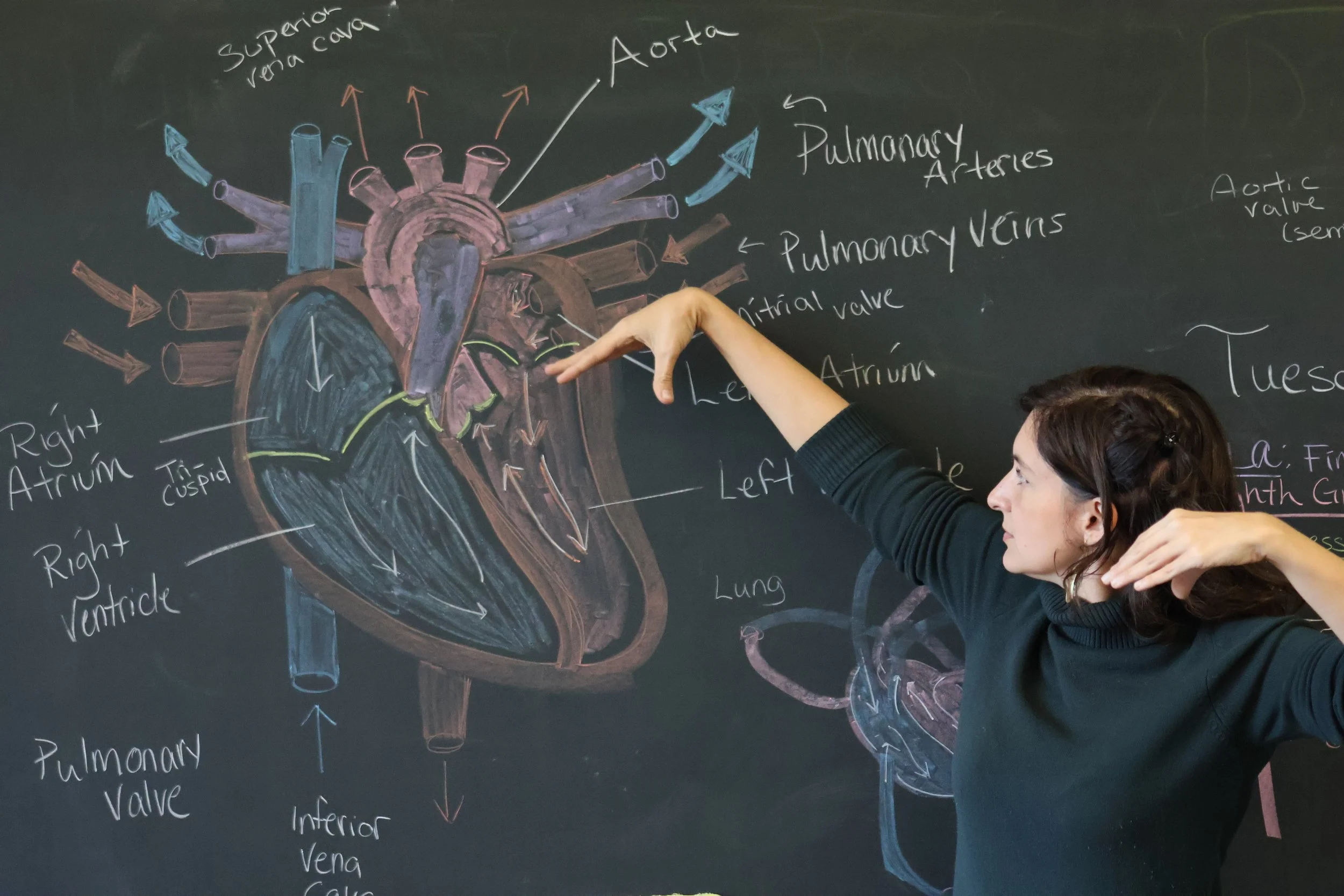
A seventh grade anatomy and physiology lesson, complete with a role play exercise where students walk a circulatory system path, exchanging blue oxygen-starved bouncy balls for red oxygen-rich bouncy balls.
Whether it’s a group of preschoolers captivated by the workings of a tractor, 2nd graders testing the laws of motion and gravity while sledding down a snowy hill, or middle schoolers eager to figure out what causes the colorful reflections in a window pane, children naturally embody many of the qualities that define an effective scientist: curiosity, creative problem solving, and a penchant for experiment and play.
At Ithaca Waldorf School, our interdisciplinary and hands-on approach to science ignites students’ natural curiosity. Our approach begins with nurturing a foundation of love, wonder, and connection with the natural world, progresses into fostering their ability to observe, question, and analyze the world around them, and lays the groundwork for advanced-level science in high school and beyond.
Here’s how we do it.
A Foundation in Early Childhood

Exploring cause and effect, testing the law of gravity, and learning to love nature in all seasons in Early Childhood.
Eager to experiment and innately creative, young children are natural science learners, whether they know it or not. Research shows that early science inquiries and experiences—most especially those that take place through uninterrupted play and self-initiated experimentation—directly encourage a young child’s awareness of and interest in science over the long term.
In line with this research, Ithaca Waldorf School’s approach to science begins with play and exploration in early childhood. Through play, children experience natural phenomena before studying them in the classroom, building an understanding of STEM concepts like weights and volumes, cause and effect, and gravity. Importantly, children at Ithaca Waldorf School also spend time outdoors every single day, fortifying their relationship with, understanding of, and respect for the natural world—as well as fostering a lifelong pro-Earth and pro-environmental outlook.
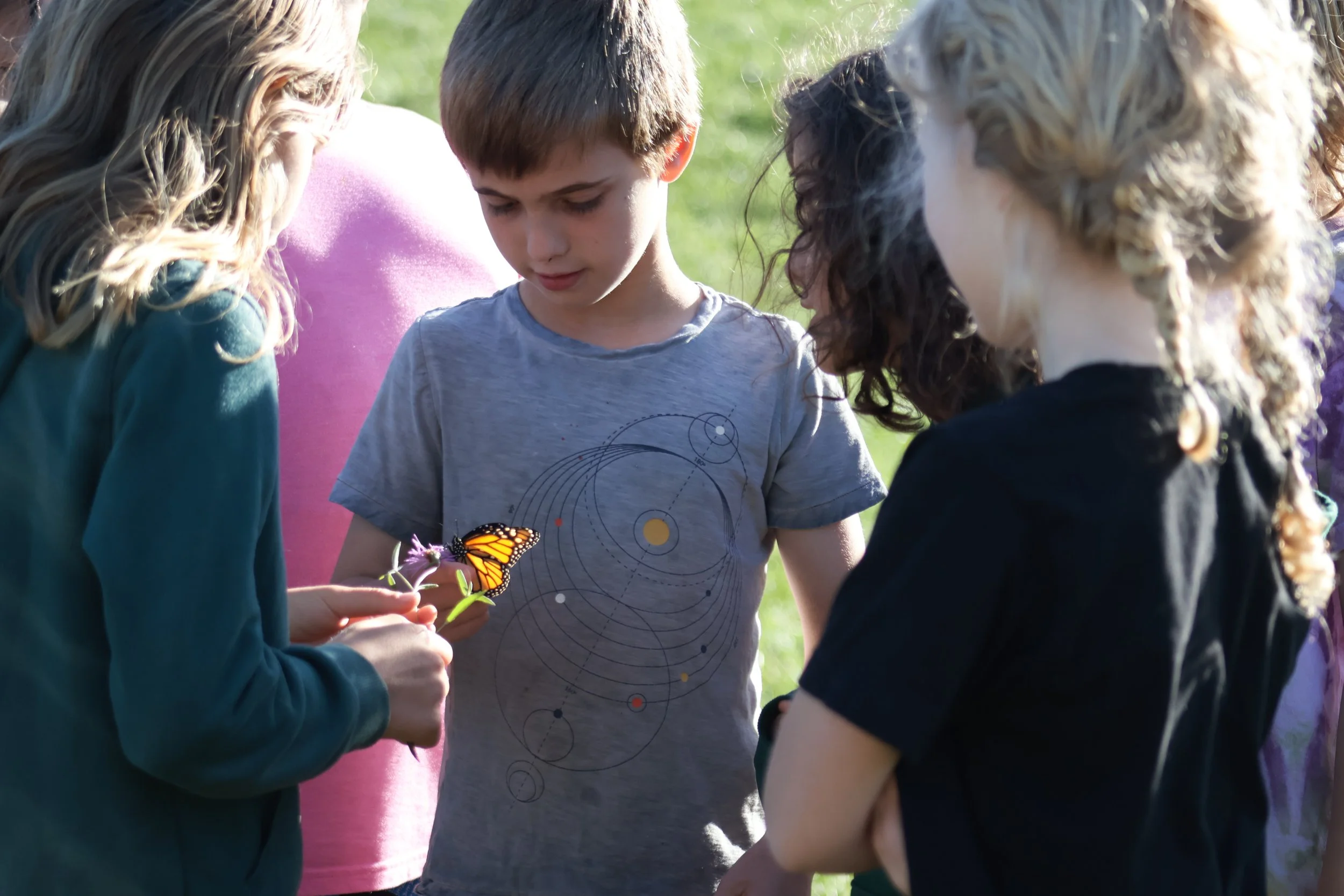
Third graders say goodbye to a friend they’ve cared for through metamorphosis in their classroom.
Learning to Observe in Elementary School
As elementary school begins, we build on the rich foundation of early childhood with a program of nature studies and life sciences. Guided by their teachers, children spend ample time in the woods, meadows, and farmland of our 80-acre campus, developing an understanding and appreciation of the Earth’s laws, rhythms, seasons, and cycles.
Students participate in tapping our maple trees and boiling sap to syrup, collecting and caring for monarch butterfly caterpillars through their metamorphosis, and caring for our farm animals. In the 3rd grade units on gardening and agriculture, students learn to mix compost, plant seeds, and harvest vegetables on the school farm, giving them a firsthand understanding of the carbon cycle.
By 4th grade, nature studies lead to more formal scientific topics, like zoology and botany, introducing students to scientific theory and vocabulary. 4th graders closely observe plants and animals in our environment, honing their powers of observation and inquiry over several days, and then creating beautiful 2-D and 3-D replicas. Later, in 5th grade botany, students build on that experience by observing and recording the minute changes that take place day to day and week to week in the transformation of a seed to sprout.
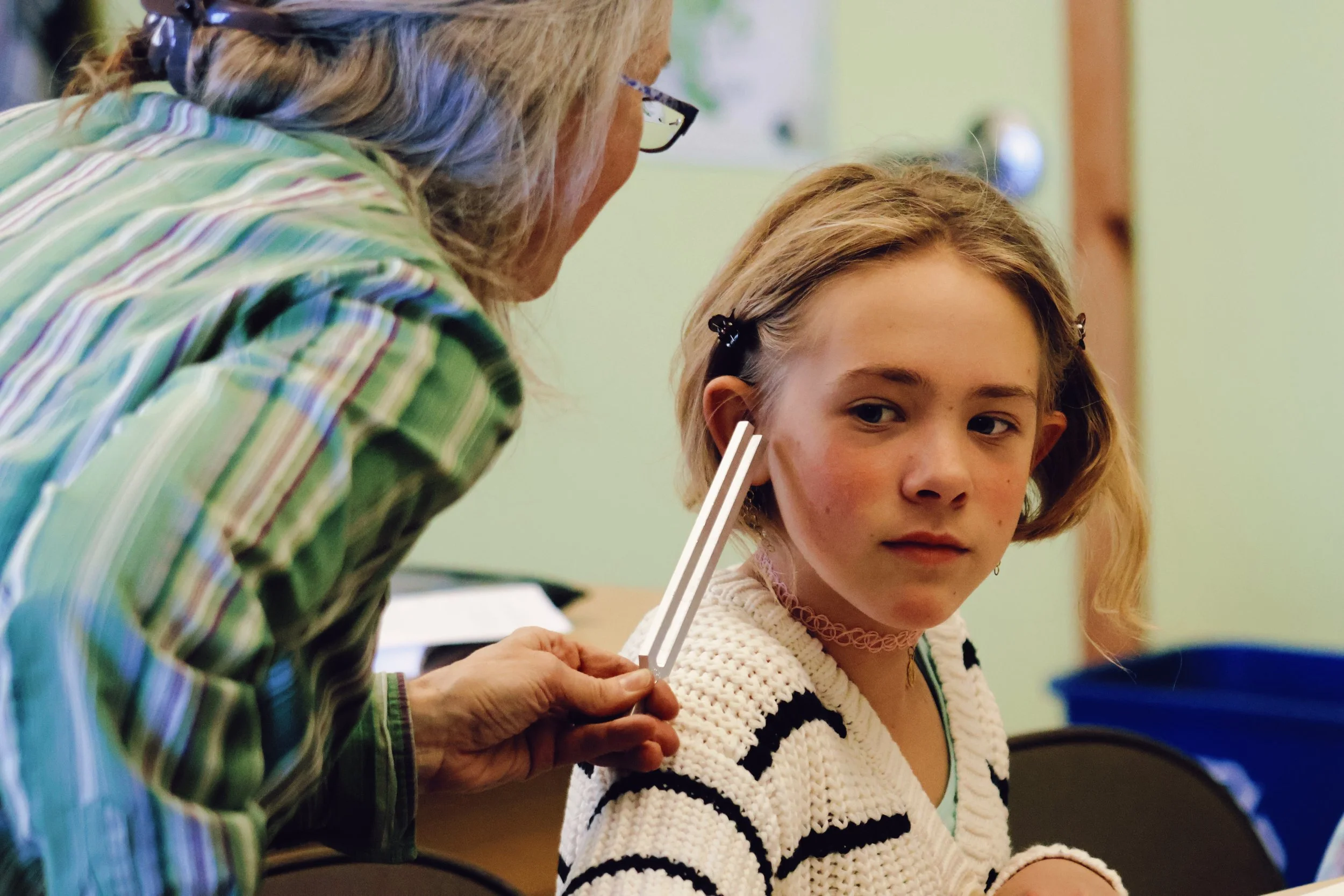
Part of a sixth grade physics demo on sound, light, heat, and magnetism.
Thinking Like a Scientist in Middle School
The content and rigor of our science program expands significantly in 6th, 7th, and 8th grade, covering a wide breadth of coursework in physics, chemistry, biology, ecology, geology, astronomy, anatomy, physiology, and mechanics. As students develop the ability for complex critical thinking skills, lab sciences and formal scientific experimentation become a central part of the curriculum.
What makes our approach unique is that students aren’t introduced to scientific principles through lectures, reading, and memorization; instead, they “discover” them through lab and field work, and review them through artistic and creative projects, leading them to understand and remember these concepts on a much deeper level. “What you're teaching in science usually starts with an experiment that you show the class,” explains 8th grade class teacher Victoria Dehan. “At first, you don't say anything about what they're witnessing. You coach the kids and they learn over time how to witness something.”
During a chemistry block, for example, students may taste and observe different sugars to discern their properties, or watch in silence as their teacher lights flammable gas in a polycarbonate jug, observing how the flame surges in size, changes color, and then extinguishes on its own. Guided by their teacher, students develop theories about what they’ve observed or experienced, eventually developing a personal understanding of the scientific principles at work, like exothermic reaction and combustion.
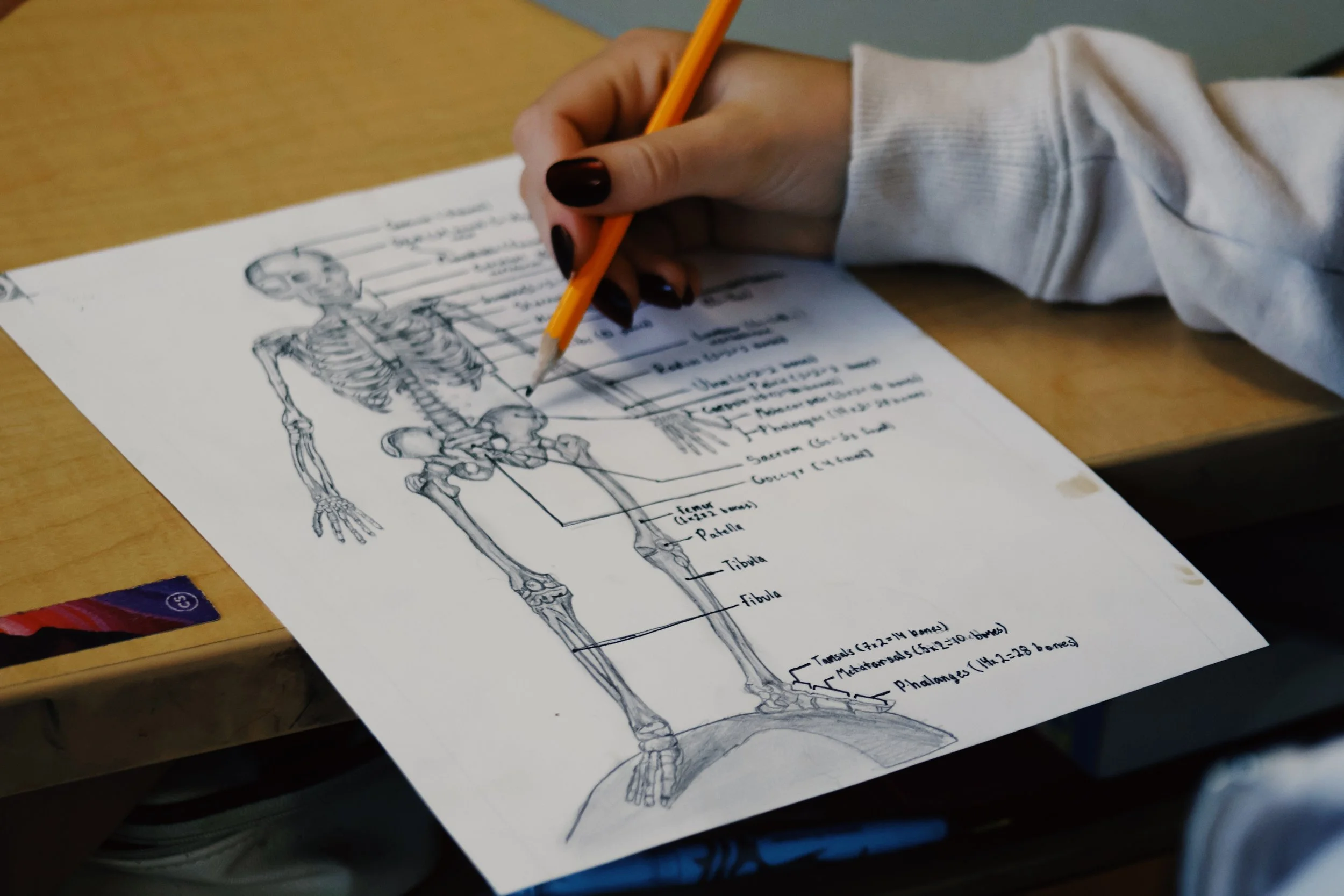
A middle school students reviewing her science lesson through art.
Interdisciplinary Approaches
As with all subject areas, Ithaca Waldorf School takes a distinctly interdisciplinary approach to science, with lessons often blending science with history, language arts, music, art, mathematics, and movement. Breaking down barriers between traditional academic subjects, students are encouraged to view every topic from multiple angles and experiences, make connections, and be flexible in their thinking.
History, for example, provides an important lens to more deeply understand science’s relevance, as well as the evolution of scientific ideas. In 6th grade astronomy, students might discuss the work of the astronomer Ptolemy, debating the logic and evidence for an Earth-based solar system, before moving on to Copernicus and the sun-centric solar system we understand today.
Importantly, reading, writing, language arts, and oral presentation are also deeply integrated into STEM subjects. In fact, middle school students are often called on to use their most advanced writing and communication skills in the sciences, learning not just to observe, but how to accurately describe what they observe in words and pictures.
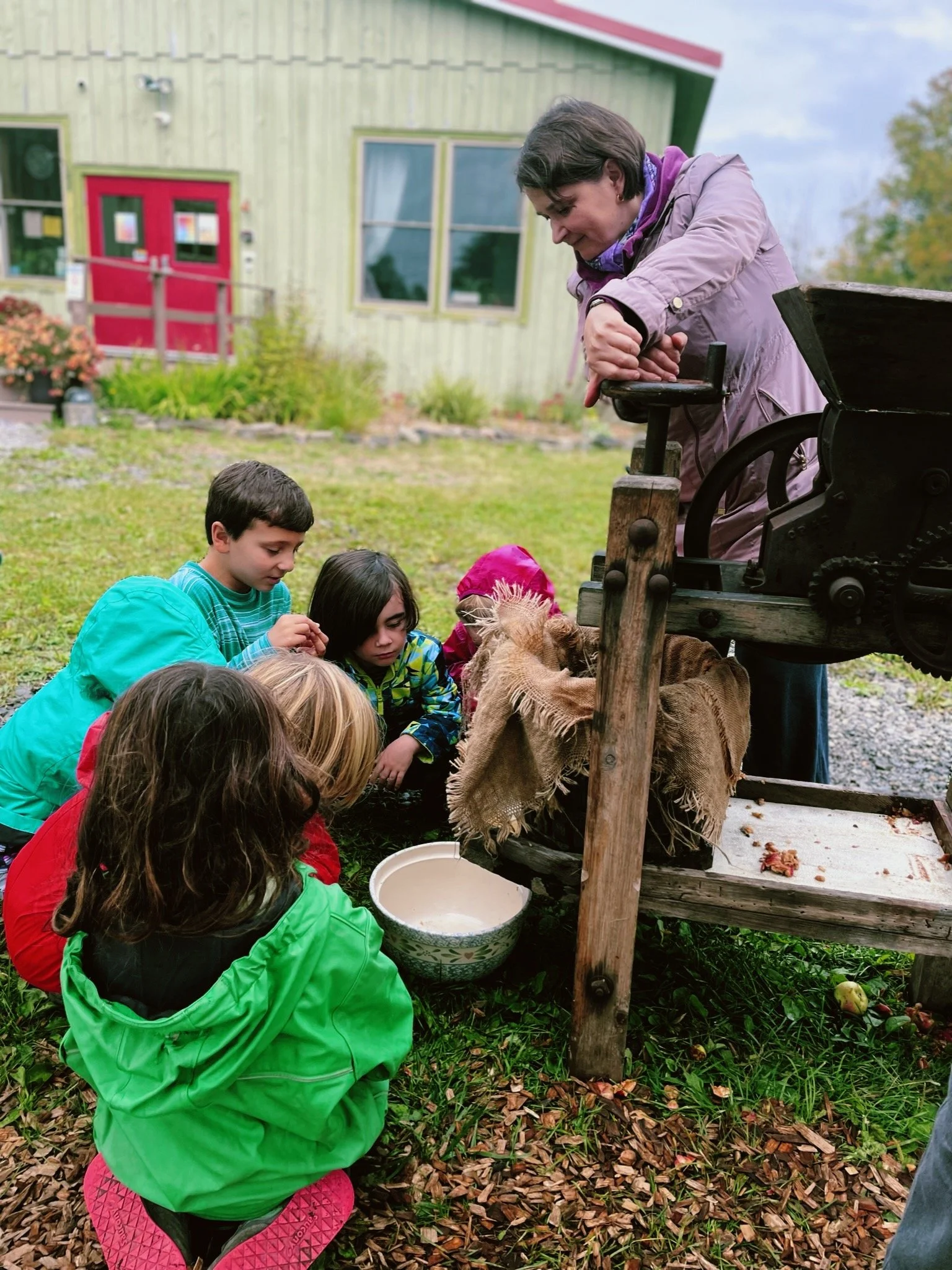
Kindergarten students press apples from our trees, experiencing the cycle of seasons, watching gears, and taking turns sharing the heavy work of pulling the crank and tasting the result.
From STEM to STEAM
At Ithaca Waldorf School, visual art is used across grade levels to boost learning, retention, and connection to academic material. “Unlike listening to a lecture or viewing an image—activities in which students passively absorb information—drawing is active. It forces students to grapple with what they’re learning and reconstruct it in a way that makes sense to them,” explains author Youki Terada in the article “The Science of Drawing and Memory” on Edutopia.
This is particularly true in STEM. Building wax models of animals during the 4th grade unit on zoology, students develop a basic understanding of anatomy and how the musculo-skeletal system functions. Years later, they’ll dig deeper into this topic, creating detailed diagrams of the brain, the eye, and of the human body at motion and at rest during 8th grade anatomy.
Just as important, art encourages the creative thinking that is essential to advancement in the sciences. In fact, the growing demand to cultivate creative thinking in math and science have led some education researchers to advocate for the inclusion of an “A” for “art” in the popular acronym STEM (science, technology, engineering, and math), underscoring the importance of creative thinking to these disciplines.
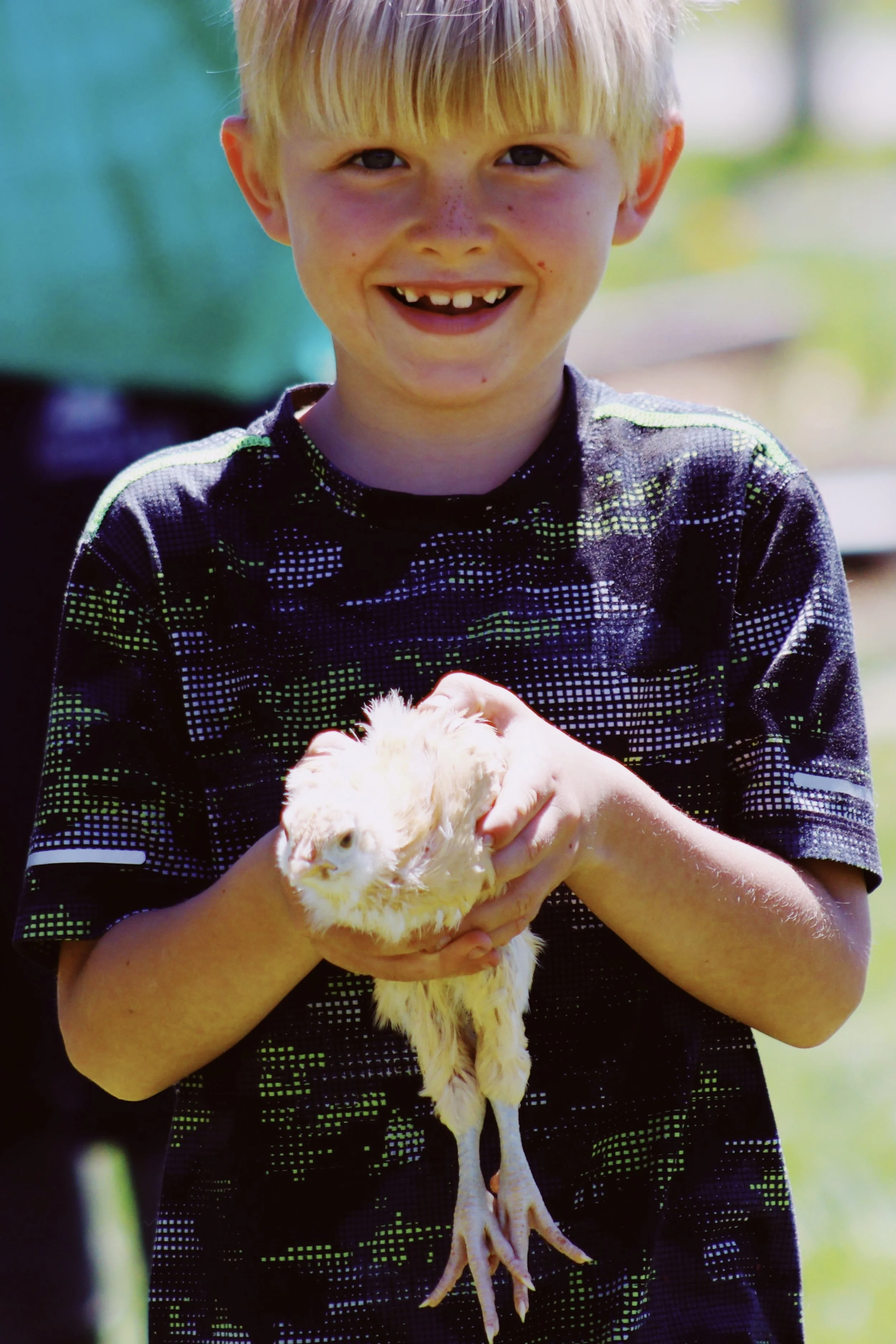
A second grader cares for chicks incubated and brooded at school during Farm Class.
An 80-acre Classroom and a Focus on Stewardship
At Ithaca Waldorf School, the science curriculum is anchored in a love of nature and curiosity about how things work, qualities that are nurtured and strengthened from early childhood onwards in our outdoor spaces and through robust farm and land stewardship programs.
Our school is currently the grateful and humble steward of 80 acres of Gayogo̱hó꞉nǫʼ (Haudenosaunee) homeland. Our 80-acre rural campus and farm are central to how children learn about the world, and a place for movement, play, field work, observation, exploration, discovery, and joy. Our Early Childhood students learn how to dress appropriately for all kinds of weather, and are outside at least half of their day. Our Elementary students spend their breaks, as well as their farm, P.E., and some science classes outdoors. In 5th, 6th, 7th, and 8th grade, students become responsible for the daily care of our sanctuary farm animals, including planning systems for hauling water, preparing for winter, and processing wool.
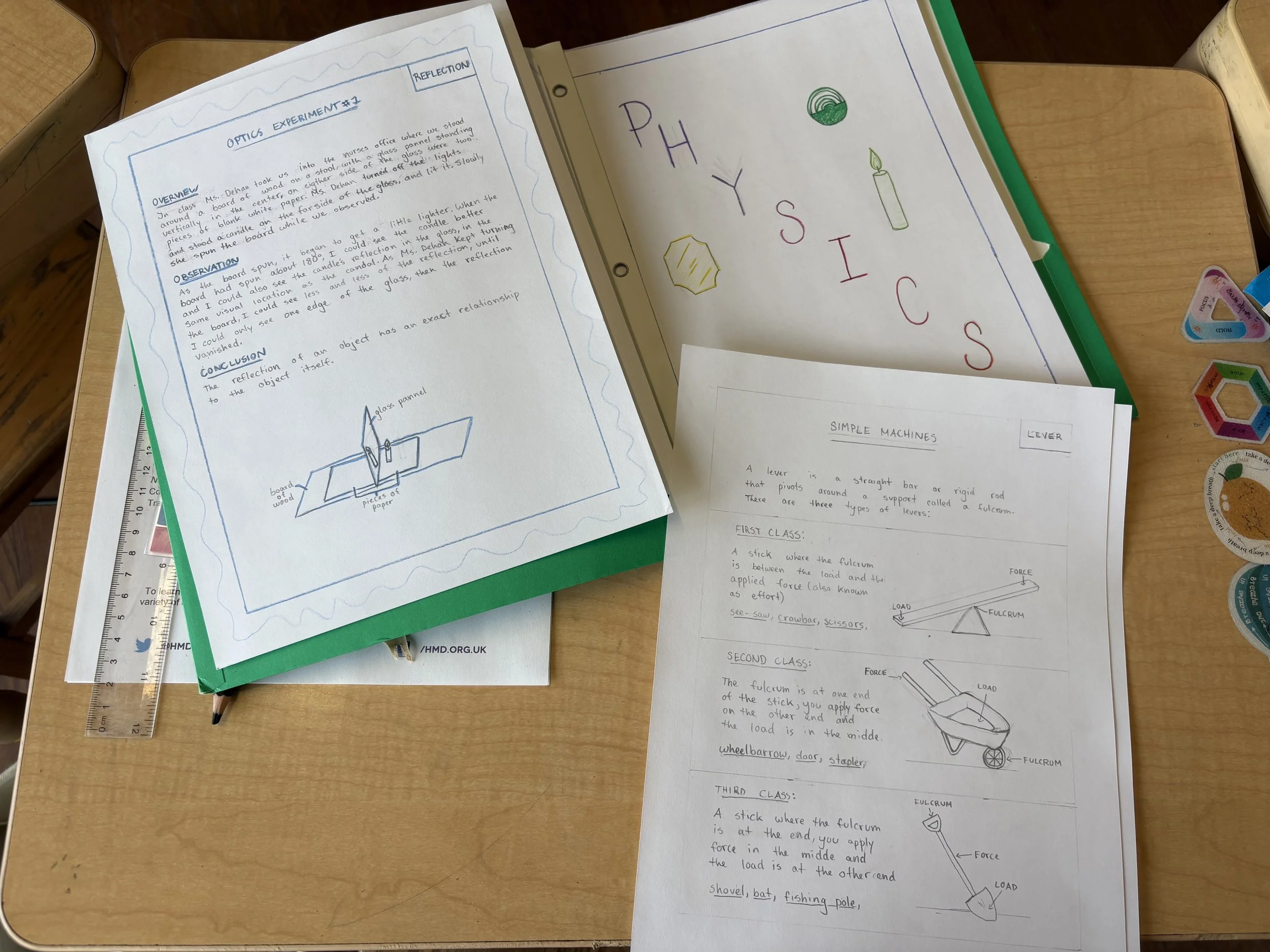
Examples of middle school lab journals during a physics unit.
Ready for High School and Beyond
Graduates of Ithaca Waldorf School are prepared with a wide breadth of knowledge and essential scientific skills when entering high school, including the ability to observe, question, and think critically about scientific phenomena and to make connections across disciplines.Our graduates routinely excel in high school science classes, often going on to study STEM fields at the college level.
Perhaps even more importantly, our students have been encouraged to experiment, hypothesize, and explore across many scientific areas. They enter high school with confidence, intensely curious about the world around them, comfortable with uncertainty, and equipped with a learned ability to work through challenges when approaching a new topic—just as they did time and again in science class.